

A Call to Order with Eithne Dunne

Ireland has no shortage of players in the burgeoning food-tech field, all of whom have literally made it their business to tackle the most pressing problems for their
food services clients, writes EITHNE DUNNE.
Given the colossal challenges the food services sector has had to face over the past two years, it needs all the help it can get. And at least some of that help will come in the form of software that will boost effciency, cut down on unnecessary time and expense, and therefore improve the all-important bottom line.
From the customer’s perspective, the restaurant
and takeaway business is pretty sophisticated from a tech point of view; you can order via an app or online and it’s generally pretty seamless. Not so, however, for those running the business, as Barry McNerney, CEO of Unify Ordering, explains:
“In most restaurants the chefs and managers are still compiling orders using paper and pen and either phoning them in to a supplier’s answering machine or emailing them,” he says.
It’s not hard to figure out that this ‘system’ can lead to all kinds of errors and misunderstandings with food orders. This translates into operational problems for the restaurant, not to mention waste. Unify’s so ware allows restaurant staff to compile orders throughout the day, collaborate on them and then send them through to suppliers – all electronically, leaving far less room for mistakes.



Real Innovation Culture with Eric Conway, BearingPoint

Instead of bandying it about as a term, BearingPoint has made innovation a core part of its identity by both thoroughly involving its people and developing its own intellectual property and unique methodologies and techniques.
The term ‘innovation’ is becoming more and more common in how companies describe themselves, how they work and what they offer to their customers. For Eric Conway, Partner and outgoing Country Leader for Ireland at BearingPoint, it’s actually becoming an irritant. “People just throw in words such as innovation, change and digital transformation for sport, when they don’t really know what real innovation is, how to promote it, measure it or track the benefits,” he says.
“Often innovation is not the idea, it is the technique to get there. An obvious example is looking at the internal operations and functions of a well-established organisation and asking them to consider how a new, rapidly growing technology firm would and does perform the same tasks. The established firms have much to learn from new companies that were able to design processes with a blank canvas, allowing for new technologies and fewer barriers based on their ‘this is how we do’ attitude.”
Employing over 4,300 people globally, and 300 in Ireland, BearingPoint is an independent management and technology consultancy with European roots and global reach. Its clients include many of the world's leading companies and government organisations.
Led by Conway, the senior management team at BearingPoint in Ireland has made a conscious effort to create a culture and environment that allows for continuous improvement – which is essentially the backbone of its approach to driving innovation.
“Every now and then you will completely innovate and change and improve how an activity, process, technology or product is created or delivered. However, most of the time you’re just trying to figure out how to make significant continuous improvements that justify the ways you’re working and the fact you’re breaking tradition, questioning the norm and not accepting that what you’re improving is already optimised,” Conway explains.
BearingPoint goes about creating the ideal environment and culture to support this in various ways. Teams are given the headspace to think, explore, debate and reflect without predetermined outcomes being forced.
“It is not a case that ‘no idea is a bad idea’, it is more that we allow staff the airtime to express their thoughts, ideas and opinions. We value everyone’s input and encourage participation,” says Conway.
“We don’t just listen to ‘the expert’ or accept ‘if it’s not broken don’t fix it’. We promote diversity and alternative thinking. Quite often, we add people to a project that have less knowledge on a given topic, process or industry to bring a perspective from another angle.”
BearingPoint measures, quantifies and rewards innovation. Its people are encouraged to get involved in communities of interest, innovation workshops and idea generation sessions. For example, it runs monthly ‘shark tank’ innovation forums where teams work together to come up with an improvement that can be used internally or for clients, or to suggest a new product or service.
“We select and reward the winners, bring the new ideas to market and seek feedback from staff on a very regular basis,” says Conway. “It’s one thing to talk about innovation, but it works a lot better if your staff are familiar with the use of modern techniques to facilitate it. Most of our staff are more than comfortable with techniques such as design sprint, design thinking and Lightning Decision Jam.”
Intellectual Property Push
Around ten years ago, BearingPoint got serious about intellectual property (IP) and progressing its innovations into software products. It has a dedicated business unit called BearingPoint Business Services (BBS), which is focused on the creation of new IP, software products, solutions and technology accelerators. Ireland has recently been added as the firm’s fourth centre of excellence for technology IP development.
Having its own IP and a catalogue of technology enablers has changed the game for the firm, according to Conway. “Not only has this made us more creative and ambitious in nature and mindset, it has also allowed us to differentiate from our competitors,” he explains. “Across the firm we have seen double-digit growth in all of our metrics in the past five years. The Dublin practice is no exception where we have over ten customers in Ireland using our international RegTech software, for example.”
In the BBS unit, BearingPoint has around 25 software solutions with typically 10 to 200 customers each. First created over ten years ago, the Emission Calculator solution is part of this suite of products. It allows an organisation to calculate, report and model all of its carbon footprint in the full life cycle of a product or all carbon emissions related to business activities such as travel or supply chain. The tracking can be done right down to every minor component of a product where the customer can model changes and adjustments in real time on an advanced analytic user interface.
Implemented by some of the best-known global brands that are leading the charge in sustainability innovation, such as Ikea and Nike, the Emission Calculator has really taken off across Europe. BearingPoint is now starting to position it in Ireland with a local team recently trained up and educating the target market here.
“The product meets the new EU regulations for carbon calculations. Therefore, in Ireland we are working to make the solution a utility where multiple companies can use it to centrally report and present summary reports to regulatory authorities,” says Conway.
“The Emission Calculator is a unique offering in the market. There is no other solution that provides the same range of functionality. Other well-known software firms are now starting to develop pilot solutions for sustainability and carbon emissions management but have some way to go.”
Embracing the Future
Looking ahead, BearingPoint plans to continue to grow its presence in each of the 23 countries it operates in, in particular China and the US, and to expand into a select number of new countries. On 1 January, Conway took on the role of Regional Leader at BearingPoint, with responsibility for seven of the firm’s well-established European countries: Ireland, Finland, Italy, the Netherlands, Norway, Sweden and the UK.
“While BearingPoint is quite progressive in terms of knowledge and people sharing from one country to the next, my ambition is to further align the seven countries and continue to improve collaboration. Since Covid-19, our customers are starting to place less of an emphasis on having our consultants onsite and in the room. This means it is far more acceptable and welcome to engage people from other BearingPoint countries,” he says.
When Conway took over the management of the Irish practice over three years ago, he had a genuine ambition to make it the best possible place to work for the staff. An example of this in action was during the Covid-19 lockdown, when the firm really turned up its focus on staff wellbeing. In addition to sending all employees items such as new desks, chairs, monitors and hampers, it started activities including online cooking classes, Zumba classes and boxercise fitness sessions.
“The boxercise was a bit special as we made it available to staff in all 23 countries and engaged professional boxing and health and wellbeing coach Eric Donovan to take the classes. It was pretty cool and motivating to complete three months of lunchtime fitness classes with Eric and then watch him fight live on Sky Sports Box Office with BearingPoint’s brand on his gear,” says Conway.
Donovan has since become BearingPoint’s official ‘Health and Wellbeing Brand Ambassador’. Conway notes: “Eric’s focus on continuous improvement, ambition, innovation, hard work and honesty match very well with our values, ways of working and inclusive mindset.”

Small Business: Nutritics
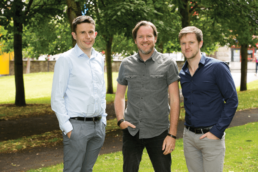
 Stephen Nolan, COO, Nutritics, Ciaran O’Kelly, CTO, Nutritics and Damian O’Kelly, CEO, Nutritics
Q: Why did you and Ciaran decide to set up Nutritics as a company?
DOK: It all started from a sense of frustration. I was working with athletes training for the Commonwealth Games as part of my master’s degree in sport and exercise nutrition and using industry standard software to analyse their diets. The programmes kept crashing, their databases were lacking and they couldn’t be accessed online or at home. Everything had to be done on the same computer in a specific computer lab. I couldn’t give these athletes back anything particularly useful. So I built my own food database in Excel, typing in hundreds of food types, until I could analyse their diets a lot more effectively. Ciaran, who is a software engineer, offered to help and together we envisioned a solution that could analyse every component of foods - from nutrition to allergens to costs - and provide this information to our customers in a way that empowers them to make better food choices.
Q: What would you say is different and compelling about what you do?
DOK: Nutritics believes in a future where accurate and reliable information about the food we consume is available when it matters most – a future where allergy sufferers can safely rely on the information their restaurant is providing, an athlete can use nutrition as their competitive advantage and patients can use food as their best medicine. There is a simple secret to our success: Every Nutritics team member is driven by a deep-rooted passion, determination and desire to deliver accurate and reliable food information to the world when it matters most. We are obsessed with growing the business and making it a global success. Despite selling into multiple markets, one of our key differentiators is localisation. At the core of every investment and product decision is a desire to make the client feel that we are just down the road from them. From our office in Dublin, we have developed localisation strategies for the US, Europe, the Middle East, Australia and South Africa.
Q: How has the business grown and were there some key breakthrough moments?
DOK: Since 2013, Nutritics has quickly grown to be the food information management software of choice for clients across more than 165 countries. Early in our journey, we were fortunate to have the support of some great clients who saw our vision for the product and wanted to be a part of what we were doing. In the education space, Oxford University was our first client which opened the door to a number of UK universities. On the sports side, we started working with the English Institute of Sport and their athletes as part of their preparation for the Rio Olympic cycle. These clients brought us instant credibility within their respective sectors and allowed us to expand quickly. Our early focus on the education, healthcare and sport markets changed overnight when an EU law was introduced in 2014 that mandated all food operators to provide allergen information for the food they serve. Our food data catered for this, so we were quickly able to pivot and provide the foodservice sector with the information they needed. This combination of regulatory changes and some great early client wins gave us the platform to grow into the UK. Word spread quickly and three years later, we had established distribution bases in Australia, the United Arab Emirates (UAE), the US and South Africa.
Q: Can you outline your exporting strategy and what makes it effective?
DOK: Nutritics’ export growth ambitions are focused on maximising both our direct online software-as-a-service sales to the SME sector and developing out our local presence to serve large corporates. The key element to both strategies is localisation. For every new territory we enter, we have built specific local websites, added local foods, translated into the local language and regularly delivered local content to build up trust with our clients and show them that we’re committed to their region. This allows us to be different, speak our clients’ language and show them that we are passionate about their region. To date, over 95% of our sales are to export markets.
Q: How important has it been to build relationships with regulators?
DOK: Regulatory alignment is an important part of our international growth strategy. Interestingly, we have found that the benefit accrues to both Nutritics and the regulator when we form these partnerships. Regulators can enjoy a greater level of food law compliance across their region by ensuring that the software used by the industry is up to date with their latest recommendations. We work closely with regulators to ensure that not only does our software facilitate compliance with food law, but that it is then delivered to the end user in an intuitive manner. This assists in meeting the food law compliance requirements for the market and Nutritics benefits from the increased brand exposure.
Q: Any other news or expansion plans you can share with us?
DOK: Despite the current environment, international growth is still very much on the agenda for the business. We currently have a team of 30 in Dublin alongside our UK, Australian, UAE and US business development teams and our plan is to increase this as quickly as we can. Alongside this, Nutritics was shortlisted for the ‘Outstanding Achievement in International Growth Award’ at the Technology Ireland Industry Awards 2020 for the second year running. This comes on the back of Nutritics being named as Ireland’s leading high potential exporter at the Irish Export Awards in 2018.

Autonomous Acceleration
 Ireland is keen to position itself as a hub for connected and autonomous vehicle (CAV) technologies and to share in a global market predicted to be worth €70bn by 2035. According to John McCarthy, Leader, Intelligent Mobility at Arup, around 100,000 new jobs could be created in Ireland in direct and indirect services for CAVs by 2030. Arup is an independent firm of designers, planners, engineers, consultants and technical specialists, working across every aspect of today’s built environment.
First up, McCarthy points out that connected and autonomous vehicles are not one and the same thing. “They’re two completely different markets that touch upon each other quite strongly,” he says.
HBAN Announces Plans to Invest in Irish Start-Ups
 The Halo Business Angel Network (HBAN) has announced that its new London Syndicate plans to invest €3 million in Irish start-ups over the next three years. Read more
Shannon Chamber Briefed by ESB Networks
 ESB Networks has visited Shannon Chamber to update its members on the latest developments in infrastructure, the electrification of heat and transport and smart technology for business. Read more
Dublin Tech Summit Launches at Convention Centre
 The Dublin Tech Summit has returned for its second year to the Convention Centre Dublin.Read more
Halo Business Angel Network Completes Quickest Deal in its History
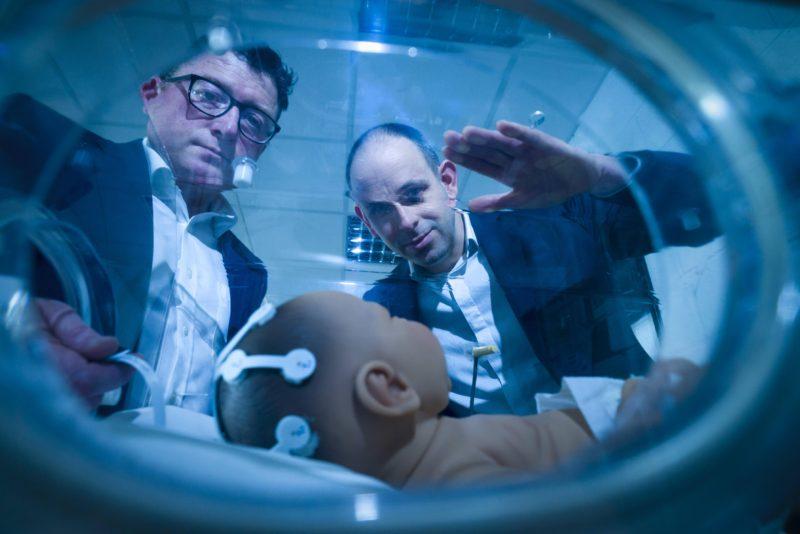 HBAN (Halo Business Angel Network), the all-island organisation responsible for the promotion of business angel investment, and a joint initiative of Enterprise Ireland and InterTradeIreland, has announced the fastest deal done in its history. Read more
Digital Transformation for Irish Greyhound Tracks
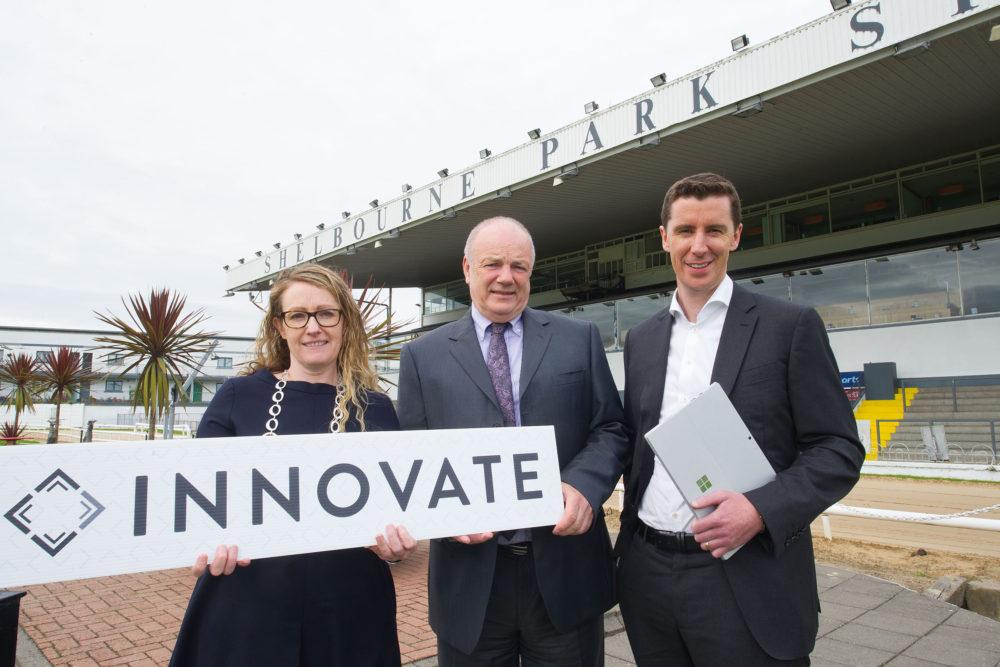
The Irish Greyhound Board (IGB) has announced a five-year technology partnership with Irish cloud service and IT solutions provider, Innovate Business Technology.Read more
Lack of Digital Skills a Concern to European Workers
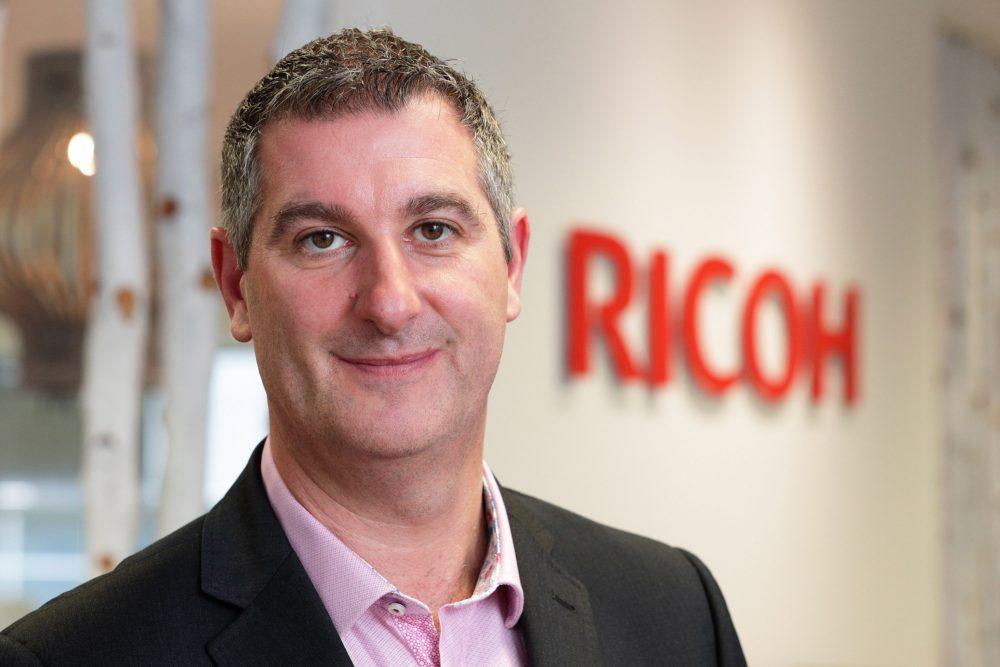 Technology company Ricoh Ireland has announced the results of a survey that has found that a lack of proficiency in digital skills is a major concern for Irish and European employees.Read more