

A Call to Order with Eithne Dunne

Ireland has no shortage of players in the burgeoning food-tech field, all of whom have literally made it their business to tackle the most pressing problems for their
food services clients, writes EITHNE DUNNE.
Given the colossal challenges the food services sector has had to face over the past two years, it needs all the help it can get. And at least some of that help will come in the form of software that will boost effciency, cut down on unnecessary time and expense, and therefore improve the all-important bottom line.
From the customer’s perspective, the restaurant
and takeaway business is pretty sophisticated from a tech point of view; you can order via an app or online and it’s generally pretty seamless. Not so, however, for those running the business, as Barry McNerney, CEO of Unify Ordering, explains:
“In most restaurants the chefs and managers are still compiling orders using paper and pen and either phoning them in to a supplier’s answering machine or emailing them,” he says.
It’s not hard to figure out that this ‘system’ can lead to all kinds of errors and misunderstandings with food orders. This translates into operational problems for the restaurant, not to mention waste. Unify’s so ware allows restaurant staff to compile orders throughout the day, collaborate on them and then send them through to suppliers – all electronically, leaving far less room for mistakes.


Natural Progression
Bord Gáis Energy is playing a leading role in the transition to net-zero greenhouse emissions by re-imagining the use of energy with the help of innovative NATURAL products and services.
Bord Gáis Energy recently announced a new partnership with French renewable energy producer Neoen on three solar farms that will provide electricity to the national grid in 2022. Under an agreement running until the end of 2037, Bord Gáis Energy will be the sole offtaker of the electricity produced from facilities in Co Meath and Co Wicklow. The three solar farms are already under construction and will have a capacity of 58MWp, the production of which will be enough to power around 12,700 homes a year. This is the latest development in Bord Gáis Energy’s transformation to support the journey to net-zero as outlined in the Government’s Climate Action Plan published in November.
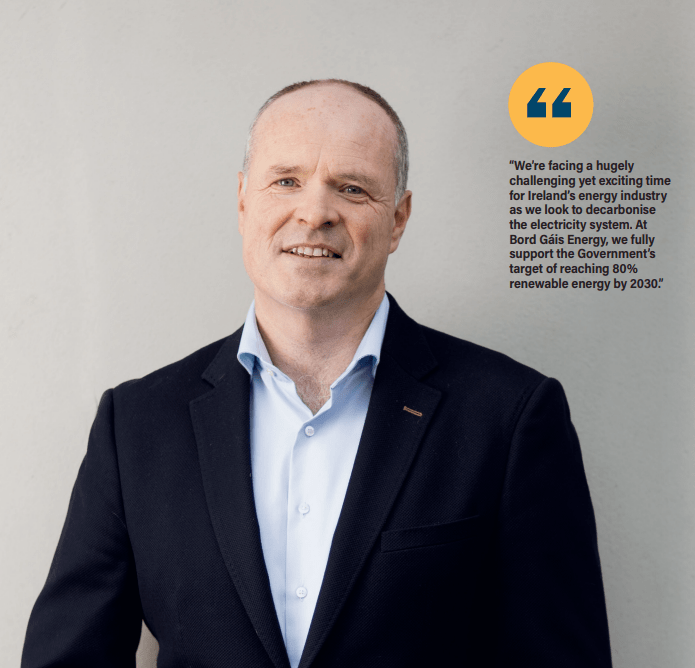
“We’re facing a hugely challenging yet exciting time for Ireland’s energy industry as we look to decarbonise the electricity system. At Bord Gáis Energy, we fully support the Government’s target of reaching 80% renewable energy by 2030,” says Dave Kirwan, Managing Director of Bord Gáis Energy. “Our current renewable supply portfolio is in excess of 220MW, which powers around 73,000 homes. We aim to treble this by 2025.”

Mentor: Kingsley Aikins
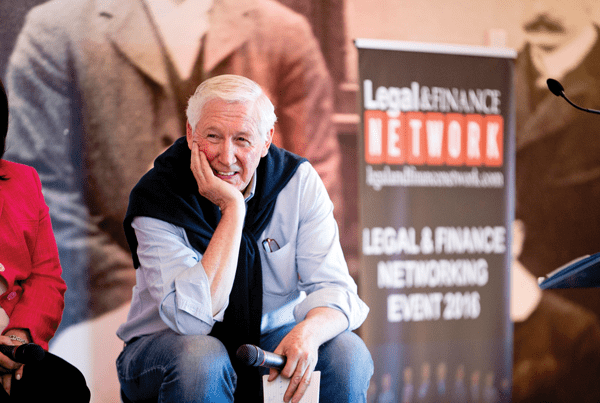
 Kingsley Aikins, CEO, The Networking Institute
Throughout his extensive career, networking has been at the heart of everything CEO of The Networking Institute Kingsley Aikins has done. Since Covid-19, he has discovered a ‘whole new tribe’ in adapting to the virtual world we all now operate in, writes Eithne Dunne.
To say that Kingsley Aikins knows a thing or two about networking would be an almost laughable understatement. The Networking Institute CEO lives and breathes it, and has done for decades. It’s a craft he honed through many years working on trade promotion, philanthropy and diaspora engagement all over the world, perhaps most notably during his 21-year stint as head of The Ireland Funds in the US, during which he raised US$250m for Irish projects. He also spent a decade in Sydney, Australia working for the Irish Trade Board and IDA Ireland, and received a CBE for his work on British-Irish relations. Now back in Dublin for what he calls the ‘third act’ of his career, Aikins is passing on his networking knowhow to both individual and corporate clients through The Networking Institute, which he founded in 2010. Deceptively powerful and oft-underestimated, networking is a skill you sideline at your peril. And it’s not just Aikins who beats this particular drum; various research studies have suggested that it’s networking – and not necessarily knowledge directly related to your job – that turns a mediocre career into a dream-fulfilling one.
As Aikins puts it, it’s the “glue that makes everything happen”. It’s also, he says, an essential key to survive and thrive in challenging times – just like the ones we find ourselves in now. Radical rethink Covid-19 turned The Networking Institute on its head earlier this year; the business went to zero overnight in February, losing all of its workshop and presentation contracts in one fell swoop. Cue a fundamental rethink of how the business operated, and what the CEO calls a ‘low-tech and high-tech’ approach. “We first audited our network, looked at our key connections and started making calls and sending emails to let people know what we were doing. We then embraced LinkedIn as our social media of choice. The reason is that, globally, over 700 million people have made information about their work, education and interests available there,” he says. The high-tech aspect of the company’s approach saw it publishing articles and videos on LinkedIn and making its first foray into what would become its saving grace – webinars. It has now done 80 of these since March, including one with Shannon Chamber.
 Kingsley Aikins, CEO, The Networking Institute
The institute’s experience this year is proof positive that there are alternative ways of doing things, even if they’re not your first choice, and the same can be said for networking successfully in the times we live in. “We just have to network differently, and use all the online opportunities we have,” says Aikins. “That’s why ‘zooming’, which no one had heard of before, is now in the lexicon. There’s turbulence right now but there’s also opportunity.” In a classic example of the power of networking, Aikins was doing a webinar for the Singapore Chamber of Commerce earlier this year, and one of the people on the call was an Irish lawyer working for an international law firm there. Aikins got talking to him, secured an introduction to a contact in the law firm’s London office and, two conversations later, is planning six webinars for that firm.
“If I had contacted this law firm directly, I wouldn’t have got past first base,” he says. “But now we have a substantial amount of work from them.” This speaks to what Aikins has dubbed the “whole new tribe” he has made connections with this year, despite – or perhaps because of – Covid-19. Personal branding Aikins firmly believes that networking is an essential tool for anyone with ambitions for their careers, and notes that many companies are now recognising the importance of hiring well-connected people. “They want to ‘hire and wire’, ie hire people, and wire into their network; they see this as an asset,” he says. So when you go to a job interview, don’t kid yourself that they’re just looking for qualifications, experience and a firm handshake. They also want to know who you know.
“This is the world of the gig economy, and you have to think about your personal brand. You need to become known for something, build a reputation. Your reputation is what someone says about you when you’re not around,” notes Aikins. He says people today may move through 20 different jobs in their careers, many of which won’t be advertised but filled through connections to the right people. “Your network is portable, it does not go out of date and it goes with you throughout your career.” Lessons learned When Aikins first went to Sydney all those years ago, he knew no-one, but was determined to practise what he now preaches by building a strong and diverse network from the ground up. He started with a tenuous connection (his mother’s neighbour’s son, who lived there at the time), asking him for an introduction to the local Irish business network.
 Kingsley Aikins, CEO, The Networking Institute
“He said there was none, so 13 of us got together and started one. We called it the Lansdowne Road Club, because we used to play rugby,” he recalls. The club dropped ‘Road’ from its title somewhere along the way, but it thrived, and last year Aikins flew to Sydney to help mark its 30th anniversary. The Lansdowne Club now has 2,000 members and is the biggest Irish business network in the world. The club’s formation was also the impetus for major opportunities in Aikins’ career. As he says himself, “one conversation can change your life”; in his case, that conversation was with legendary businessman and former head of Independent News & Media Tony O’Reilly. Aikins had written to O’Reilly asking him to head up the Lansdowne Club. “He said yes, asked me was I free for lunch, and I ended up working for him for 21 years on The Ireland Funds.” He learned much about networking from O’Reilly and others, including The Ireland Funds co-founder and former US Ambassador to Ireland, Dan Rooney.
“Hang around a good networker, and guess what you’ll become? A good networker,” notes Aikins. When reflecting on your existing network, Aikins says the question to ask is: does my network reflect the diversity of the society I live in? “For most, the answer is no. We all have a tendency to hang around with people like ourselves, but it’s really important that you bring elements into your life that allow you to meet non-likeminded people.” That shouldn’t be too difficult, even if your network is mainly based in Ireland, particularly the capital. “When I grew up in Dublin, it was male, pale and stale,” says Aikins.
“Now 33% of the working-age population here were not born in Ireland, so it’s an intensely cosmopolitan city.” A networking culture Companies that recognise the power of networking need to embrace it by training their staff in it, and encouraging them to develop an online identity, in Aikins’ view. “They should budget for this, and open up their organisation to lots of different types of people. Before Covid-19, there was a big problem with the attraction and retention of talented staff. Firms have to create an enabling environment which makes it attractive for people to be there. In the old days, companies outlived people, now people outlive companies.”
Businesses that have taken this on board subscribe to the notion of ‘network intelligence’ – in other words, that there are more smart people outside your company than inside, and you can tap into this resource. You don’t have to become a whizz at networking overnight, far from it. Even the smallest moves towards a better network can have an impact far beyond the effort it takes to make them. “Life is a game of inches, and the difference between success and failure can be tiny,” says Aikins. He’s a firm believer in the theory of marginal gains – the idea that small nudges in a certain direction can tip you over into much larger successes. Aikins himself experienced this often when working with IDA Ireland trying to attract foreign direct investment (FDI). “If we got an FDI deal, great, but if we came a very close second, we got nothing. If you improve what you’re doing by 1%, you don’t get 1% more, you get 100% more,” he says.


Industry Feature: From HR to Eternity

The use of software and technology to support human resources management has never been more critical than it was in 2020, writes Derek Nagle.
Covid-19 has presented many challenges to businesses across Ireland since the pandemic reached these shores – not least the one posed by human resources (HR) management as more and more employees are forced to work from home. Some companies have particularly embraced this sea change with new and innovative solutions that benefit both employer and employee.
Anthony Cronin is founder of Waterford-based Flexiwage. He started the company in 2016 after working for some of the world’s leading payroll service providers for many years, including ADP, SafeGuardWorld International and CoreHR.
 Anthony Cronin, Founder, Flexiwage
From a business perspective, the hardship and difficulties that Covid-19 brought with it are not something that Cronin wishes to experience again, but feels that the pandemic also inspired an unprecedented level of smart tech creativity and innovation.
“Employers were proactive in the push to quickly adapt to new and better ways to communicate, connect and engage with teams, to support working from home and to deal with very dynamic changes in wage supplement implementation, staffing levels disruption and business contingency,” he says.
The idea for Flexiwage came from Cronin identifying the difficulties some workers were experiencing in managing their finances across a monthly period, particularly amongst younger workers and those in lower paid jobs. This was adversely affecting their financial wellness as well as having the further negative effect of people seeking short-term costly credit to see them through to pay day.
Smart innovation Noticing how the worldwide introduction of a monthly pay system over 30 years ago contributed to a rise in debt and short-term credit, Cronin was keen to find an innovation that was smart, simple and benefitted both employers and staff.
A financial activity tracker for employees, Flexiwage is a game changer in payroll, he believes: “Allowing employees to determine their own wage frequency while employers can still run a monthly payroll has not just commercial value to the company in how it saves it money but also boosts employee engagement by providing and supporting greater choice, control and financial well-being,” he says. “Flexiwage allows individuals to schedule their income in a pay frequency that suits their needs without impacting a company’s ability to pay monthly.”
Software developed by Flexiwage can be applied to an employer’s payroll system and can reduce their administration costs by up to 75%. Developers believe it has the potential to revolutionise the industry, being the first major innovation in the payroll world in 30 years.
Since 2019 the company has signed up a number of large international clients including Eurofins and Voxpro. It recently secured a 20-year US patent on its self-scheduled salary software. The process took four years overall and represents a major milestone for the company, which plans to open an office in Boston in the US in early 2021. Increasingly relevant When Covid-19 hit, Flexiwage recognised that functionality had become more acutely relevant overnight as individual workers had to navigate the financial challenges impacting their income and household earnings. The company was proud to play its part in supporting clients and their staff members, many of whom were essential workers during the Covid-19 period. The increased pace of implementation schedules, the sense of urgency, the inclusive communications processes and willingness of all stakeholders to adapt to change, new practices and technologies impressed Cronin greatly. Cronin is quite clear on what is driving the latest trend in payroll technology: “The costs associated with running payroll on a weekly basis have become unsustainable for the most part. Businesses that outsource the function currently can pay up to €5 per person and when payroll is run weekly within an SME or large-scale business, the cost is significant. But we are hugely encouraged by the moves towards investing in employee engagement and wellness initiatives, which is where Flexiwage fits in, providing benefits and value-added services that boost employee satisfaction and productivity as a result.”
Data analytics drive Philip Carney, CEO of The HR Company in Sandyford, Dublin notes that a lot of the latest trends in HR and technology are now driven through data analytics. As companies continue to explore their raw data and data needs, solutions will be found through the advent of technology, he says.
 Philip Carney, CEO, The HR Company
“We have seen the phenomenal growth of Zoom and Microsoft Teams as well as online recruitment assessments using tools such as the ‘Predictive Indicator’. We have also seen significant growth in resolving employee disputes online through the Workplace Relations Commission, as well as an increase in performing medical assessments and employment development programmes remotely.”
Carney is quick to recognise the role of technology in solving various challenges from a HR perspective. Ready access to personal data held on work-related systems means some staff members have the option to complete personal work outside normal working hours. He cites signing a Terms and Conditions of Employment through DocuSign or similar platforms as a prime example. Others include staff updating their personal data on their organisation’s cloud-hosted HR database, such as a change of address, reviewing pension entitlements through a pension platform or adding additional children to their medical plans. There is also the option to complete employee online surveys and send questions to ‘Ask your HR Expert’ as they arise. As far as Covid-19 is concerned, apart from the growth of Zoom and Microsoft Teams, Carney expects to see a growth in the area of mental health awareness from the continued drive for home working.
Because the world of work has changed so dramatically in recent months, The HR Company had to respond accordingly. “We are responding to the need for more and more support using online technologies. These tools were always available to us but now they have been accelerated with the day-to-day demand and interaction we have with our clients in the current environment,” says Carney.
“We are developing tools from inception such as our Gender Pay Gap application, a new tool designed to proactively address this issue. In addition, we are continuing to expand our data protection offering to support SMEs in managing both internal HR records as well as the data they share with their various vendors.” A continuing trend Seamus Byrne, Director of Dublin-based Sapient and Vice President, EMEA of SNP Communications feels it is very likely that tools such as Microsoft Teams and Zoom will continue in the post-pandemic world. These tools represent a viable and cost-effective alternative to being in the office, particularly for meetings and training.
 Seamus Byrne, Director, Sapient and Vice President, EMEA of SNP Communications
“SNP Communications has conducted thousands of virtual workshops since March, using Zoom or similar, aimed at equipping employees with the skills and confidence to engage, collaborate and sell in the virtual world,” he notes. “Working from home means ‘water cooler interaction’ has all but disappeared. By getting employees from across the organisation into two-hour workshops, companies can improve cross-functional interaction and collaboration, while also ensuring their employees are more competent and confident when engaging over video.”
Byrne also notes that training sessions are now typically shorter – usually two hours is the maximum – so it may be difficult for full-day and multiple-day training to become the norm again in 2021 and beyond. Physical location is no longer an issue because everyone is in the same place, on the computer screen, normally working from home. But there is another issue: “Time zones are still a challenge, but it’s not uncommon to see people from San Francisco to Singapore, Belgium to Brazil in the same workshop. That would have been highly unusual and prohibitively expensive in 2019, but in an age of social distancing, this new ‘proximity’ can provide many collateral benefits,” notes Byrne.
Entrepreneur: Nicola Mitchell
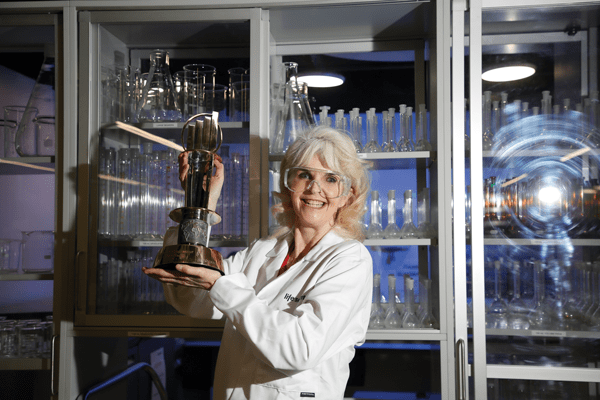
 Nicola Mitchell, Founder and CEO, Life Scientific with her EY Entrepreneur of the Year Award
The EY Entrepreneur of the Year 2020 is Nicola Mitchell, Founder and CEO of Life Scientific, a progressive company specialising in the development and registration of generic, ‘off-patent’ agrochemicals. Its goal is to give customers better options to meet their crop protection needs.
Q: Would you say you always had a business head on your shoulders?
NM: I left University College Cork with a master’s qualification in Chemistry and a clear ambition to one day build a multinational business based on science. As a graduate, I took up a role with a generic agrochemicals manufacturer and spent 10 years there learning the industry. I could see the regulatory landscape for agrochemicals was changing and how future success could be defined by a deep understanding of chemistry and regulation.
Q: What is the secret to the success and growth of Life Scientific?
NM: Our in-house research and development (R&D) function is our unique selling point and our critical success factor. We have the ability to reverse engineer a product from the original to produce a product accepted as identical by agrochemical regulatory authorities. It’s a bit like unravelling the Coca Cola recipe – taking the final product and breaking it down into its component ingredients so that we can then put it back together. We don’t just reverse engineer the multinationals’ products, but everything they do – their dossiers, strategies, processes and people – to learn how they think. But producing the clone is only half the story. We have to get the product approved and the natural reaction of regulators is to say ‘no’. We have to build a very convincing case to show our product is comparable and ensure the only conclusion they can come to is to say ‘yes’.
Q: What does your approach to R&D allow you to do differently?
NM: Our unique approach to R&D means we can offer agrochemical products to agronomists and growers earlier than any other off-patent company. The only difference between our product and that of the brand leader is cost. Ours costs less. We can break multinational product recipes down into their component parts and reconstitute them in new ways, for example to increase efficacy by 30%. Because multinationals don’t compete on each other’s products, we are the only company selling all of the key building blocks, making it easier for us to introduce novel combinations for growing a clean and healthy crop. We have also developed novel formulations that work at significantly reduced dose rates.
 Nicola Mitchell, Founder and CEO, Life Scientific with her EY Entrepreneur of the Year Award
Q: How have you grown and developed the business?
NM: I started Life Scientific from a room on the University College Dublin (UCD) campus in 1995 and it quickly became the first Good Laboratory Practice facility in Ireland, offering contract product development services to agrochemical and pharmaceutical clients. Over time, we established the product development capability for generics and, by 2011, the company had successfully pivoted from being a service provider to developing and selling our own products. Today, Life Scientific employs over 80 people and has a portfolio of 62 registered products sold in five countries. We have achieved 50% revenue growth to €60m in the last financial year.
Q: How do you see the business evolving from here?
NM: We have always been a global business – purchasing in Asia, manufacturing and selling in the EU and now planning regulatory filings in North and South America. It is very difficult to replicate our core competence of reverse engineering capability coupled with deep regulatory knowledge. That said, we are always looking to push further and stay ahead. We have a number of research projects ongoing, including with UCD. Agrochemicals are our focus today, but our platform is nimble and agile enough for us to be fast followers of innovation in the crop protection industry, whatever direction that takes. Biocontrol is the obvious move – we will be there when the time is right.
Q: What key lessons have you learned as CEO of Life Scientific?
NM: Only the best will do when attracting and retaining the team. It is the team which has brought the company to where it is now, has shaped our path and will define future success. Our company culture is based on shared leadership and matching responsibility with expertise to create a flexible, collaborative environment for a uniquely productive and enjoyable work experience. More than half of the team are scientists, based at our headquarters in Belfield Office Park near the UCD campus. I recruited many of these scientists myself and within an instant got the sense they were winners, able to see through the confusion of our formative years and happy to be thrown in at the deep end. They make all the hardship worthwhile on days when the whole world seems to be conspiring against you. Simply knowing that if your team can’t do it, then nobody can, is what makes you jump out of bed the next day, all fired up and armed with a brand new set of tactics. Q: Where would you like to be with Life Scientific in five years’ time? NM: Earning annual revenues of €250m with a billion dollar valuation and ultimately to emerge as the single biggest disrupter/challenger in our industry.
Real Innovation Culture with Eric Conway, BearingPoint

Instead of bandying it about as a term, BearingPoint has made innovation a core part of its identity by both thoroughly involving its people and developing its own intellectual property and unique methodologies and techniques.
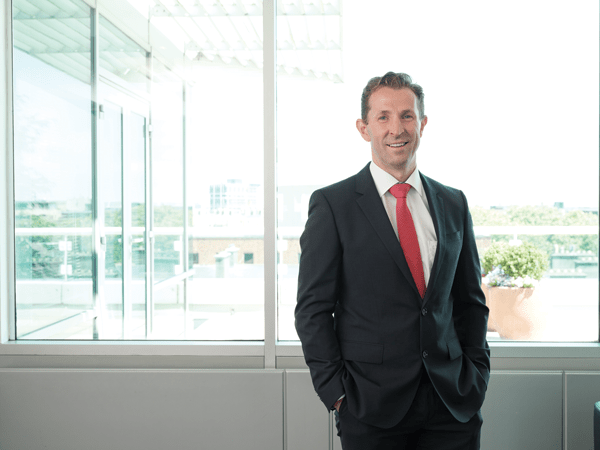
The term ‘innovation’ is becoming more and more common in how companies describe themselves, how they work and what they offer to their customers. For Eric Conway, Partner and outgoing Country Leader for Ireland at BearingPoint, it’s actually becoming an irritant. “People just throw in words such as innovation, change and digital transformation for sport, when they don’t really know what real innovation is, how to promote it, measure it or track the benefits,” he says.
“Often innovation is not the idea, it is the technique to get there. An obvious example is looking at the internal operations and functions of a well-established organisation and asking them to consider how a new, rapidly growing technology firm would and does perform the same tasks. The established firms have much to learn from new companies that were able to design processes with a blank canvas, allowing for new technologies and fewer barriers based on their ‘this is how we do’ attitude.”
Employing over 4,300 people globally, and 300 in Ireland, BearingPoint is an independent management and technology consultancy with European roots and global reach. Its clients include many of the world's leading companies and government organisations.
Led by Conway, the senior management team at BearingPoint in Ireland has made a conscious effort to create a culture and environment that allows for continuous improvement – which is essentially the backbone of its approach to driving innovation.
“Every now and then you will completely innovate and change and improve how an activity, process, technology or product is created or delivered. However, most of the time you’re just trying to figure out how to make significant continuous improvements that justify the ways you’re working and the fact you’re breaking tradition, questioning the norm and not accepting that what you’re improving is already optimised,” Conway explains.
BearingPoint goes about creating the ideal environment and culture to support this in various ways. Teams are given the headspace to think, explore, debate and reflect without predetermined outcomes being forced.
“It is not a case that ‘no idea is a bad idea’, it is more that we allow staff the airtime to express their thoughts, ideas and opinions. We value everyone’s input and encourage participation,” says Conway.
“We don’t just listen to ‘the expert’ or accept ‘if it’s not broken don’t fix it’. We promote diversity and alternative thinking. Quite often, we add people to a project that have less knowledge on a given topic, process or industry to bring a perspective from another angle.”
BearingPoint measures, quantifies and rewards innovation. Its people are encouraged to get involved in communities of interest, innovation workshops and idea generation sessions. For example, it runs monthly ‘shark tank’ innovation forums where teams work together to come up with an improvement that can be used internally or for clients, or to suggest a new product or service.
“We select and reward the winners, bring the new ideas to market and seek feedback from staff on a very regular basis,” says Conway. “It’s one thing to talk about innovation, but it works a lot better if your staff are familiar with the use of modern techniques to facilitate it. Most of our staff are more than comfortable with techniques such as design sprint, design thinking and Lightning Decision Jam.”
Intellectual Property Push
Around ten years ago, BearingPoint got serious about intellectual property (IP) and progressing its innovations into software products. It has a dedicated business unit called BearingPoint Business Services (BBS), which is focused on the creation of new IP, software products, solutions and technology accelerators. Ireland has recently been added as the firm’s fourth centre of excellence for technology IP development.
Having its own IP and a catalogue of technology enablers has changed the game for the firm, according to Conway. “Not only has this made us more creative and ambitious in nature and mindset, it has also allowed us to differentiate from our competitors,” he explains. “Across the firm we have seen double-digit growth in all of our metrics in the past five years. The Dublin practice is no exception where we have over ten customers in Ireland using our international RegTech software, for example.”
In the BBS unit, BearingPoint has around 25 software solutions with typically 10 to 200 customers each. First created over ten years ago, the Emission Calculator solution is part of this suite of products. It allows an organisation to calculate, report and model all of its carbon footprint in the full life cycle of a product or all carbon emissions related to business activities such as travel or supply chain. The tracking can be done right down to every minor component of a product where the customer can model changes and adjustments in real time on an advanced analytic user interface.
Implemented by some of the best-known global brands that are leading the charge in sustainability innovation, such as Ikea and Nike, the Emission Calculator has really taken off across Europe. BearingPoint is now starting to position it in Ireland with a local team recently trained up and educating the target market here.
“The product meets the new EU regulations for carbon calculations. Therefore, in Ireland we are working to make the solution a utility where multiple companies can use it to centrally report and present summary reports to regulatory authorities,” says Conway.
“The Emission Calculator is a unique offering in the market. There is no other solution that provides the same range of functionality. Other well-known software firms are now starting to develop pilot solutions for sustainability and carbon emissions management but have some way to go.”
Embracing the Future
Looking ahead, BearingPoint plans to continue to grow its presence in each of the 23 countries it operates in, in particular China and the US, and to expand into a select number of new countries. On 1 January, Conway took on the role of Regional Leader at BearingPoint, with responsibility for seven of the firm’s well-established European countries: Ireland, Finland, Italy, the Netherlands, Norway, Sweden and the UK.
“While BearingPoint is quite progressive in terms of knowledge and people sharing from one country to the next, my ambition is to further align the seven countries and continue to improve collaboration. Since Covid-19, our customers are starting to place less of an emphasis on having our consultants onsite and in the room. This means it is far more acceptable and welcome to engage people from other BearingPoint countries,” he says.
When Conway took over the management of the Irish practice over three years ago, he had a genuine ambition to make it the best possible place to work for the staff. An example of this in action was during the Covid-19 lockdown, when the firm really turned up its focus on staff wellbeing. In addition to sending all employees items such as new desks, chairs, monitors and hampers, it started activities including online cooking classes, Zumba classes and boxercise fitness sessions.
“The boxercise was a bit special as we made it available to staff in all 23 countries and engaged professional boxing and health and wellbeing coach Eric Donovan to take the classes. It was pretty cool and motivating to complete three months of lunchtime fitness classes with Eric and then watch him fight live on Sky Sports Box Office with BearingPoint’s brand on his gear,” says Conway.
Donovan has since become BearingPoint’s official ‘Health and Wellbeing Brand Ambassador’. Conway notes: “Eric’s focus on continuous improvement, ambition, innovation, hard work and honesty match very well with our values, ways of working and inclusive mindset.”
Small Business: Nutritics
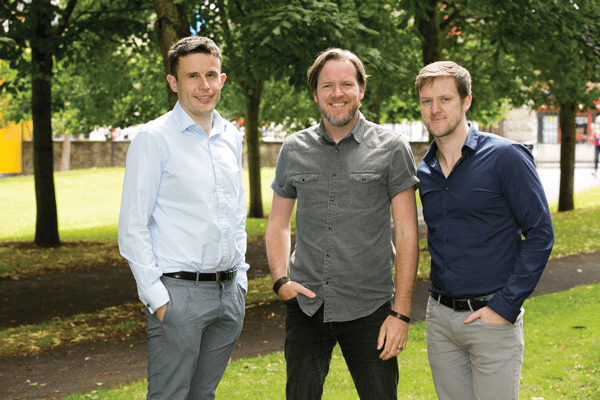
 Stephen Nolan, COO, Nutritics, Ciaran O’Kelly, CTO, Nutritics and Damian O’Kelly, CEO, Nutritics
Q: Why did you and Ciaran decide to set up Nutritics as a company?
DOK: It all started from a sense of frustration. I was working with athletes training for the Commonwealth Games as part of my master’s degree in sport and exercise nutrition and using industry standard software to analyse their diets. The programmes kept crashing, their databases were lacking and they couldn’t be accessed online or at home. Everything had to be done on the same computer in a specific computer lab. I couldn’t give these athletes back anything particularly useful. So I built my own food database in Excel, typing in hundreds of food types, until I could analyse their diets a lot more effectively. Ciaran, who is a software engineer, offered to help and together we envisioned a solution that could analyse every component of foods - from nutrition to allergens to costs - and provide this information to our customers in a way that empowers them to make better food choices.
Q: What would you say is different and compelling about what you do?
DOK: Nutritics believes in a future where accurate and reliable information about the food we consume is available when it matters most – a future where allergy sufferers can safely rely on the information their restaurant is providing, an athlete can use nutrition as their competitive advantage and patients can use food as their best medicine. There is a simple secret to our success: Every Nutritics team member is driven by a deep-rooted passion, determination and desire to deliver accurate and reliable food information to the world when it matters most. We are obsessed with growing the business and making it a global success. Despite selling into multiple markets, one of our key differentiators is localisation. At the core of every investment and product decision is a desire to make the client feel that we are just down the road from them. From our office in Dublin, we have developed localisation strategies for the US, Europe, the Middle East, Australia and South Africa.
Q: How has the business grown and were there some key breakthrough moments?
DOK: Since 2013, Nutritics has quickly grown to be the food information management software of choice for clients across more than 165 countries. Early in our journey, we were fortunate to have the support of some great clients who saw our vision for the product and wanted to be a part of what we were doing. In the education space, Oxford University was our first client which opened the door to a number of UK universities. On the sports side, we started working with the English Institute of Sport and their athletes as part of their preparation for the Rio Olympic cycle. These clients brought us instant credibility within their respective sectors and allowed us to expand quickly. Our early focus on the education, healthcare and sport markets changed overnight when an EU law was introduced in 2014 that mandated all food operators to provide allergen information for the food they serve. Our food data catered for this, so we were quickly able to pivot and provide the foodservice sector with the information they needed. This combination of regulatory changes and some great early client wins gave us the platform to grow into the UK. Word spread quickly and three years later, we had established distribution bases in Australia, the United Arab Emirates (UAE), the US and South Africa.
Q: Can you outline your exporting strategy and what makes it effective?
DOK: Nutritics’ export growth ambitions are focused on maximising both our direct online software-as-a-service sales to the SME sector and developing out our local presence to serve large corporates. The key element to both strategies is localisation. For every new territory we enter, we have built specific local websites, added local foods, translated into the local language and regularly delivered local content to build up trust with our clients and show them that we’re committed to their region. This allows us to be different, speak our clients’ language and show them that we are passionate about their region. To date, over 95% of our sales are to export markets.
Q: How important has it been to build relationships with regulators?
DOK: Regulatory alignment is an important part of our international growth strategy. Interestingly, we have found that the benefit accrues to both Nutritics and the regulator when we form these partnerships. Regulators can enjoy a greater level of food law compliance across their region by ensuring that the software used by the industry is up to date with their latest recommendations. We work closely with regulators to ensure that not only does our software facilitate compliance with food law, but that it is then delivered to the end user in an intuitive manner. This assists in meeting the food law compliance requirements for the market and Nutritics benefits from the increased brand exposure.
Q: Any other news or expansion plans you can share with us?
DOK: Despite the current environment, international growth is still very much on the agenda for the business. We currently have a team of 30 in Dublin alongside our UK, Australian, UAE and US business development teams and our plan is to increase this as quickly as we can. Alongside this, Nutritics was shortlisted for the ‘Outstanding Achievement in International Growth Award’ at the Technology Ireland Industry Awards 2020 for the second year running. This comes on the back of Nutritics being named as Ireland’s leading high potential exporter at the Irish Export Awards in 2018.

Back for Business scheme supports returning Irish emigrants
The Irish government has launched a new initiative to support Irish emigrants who wish to develop a business in Ireland.
Ireland Among World Leaders in Women Leadership
Ireland ranks 17th in the 2018 Women in Leadership index conducted by the IESE Business School, with very strong progress in the social leadership dimension and a leading position in the business leadership sphere.
PayPal hackathon helps six Irish charities solve digital challenges
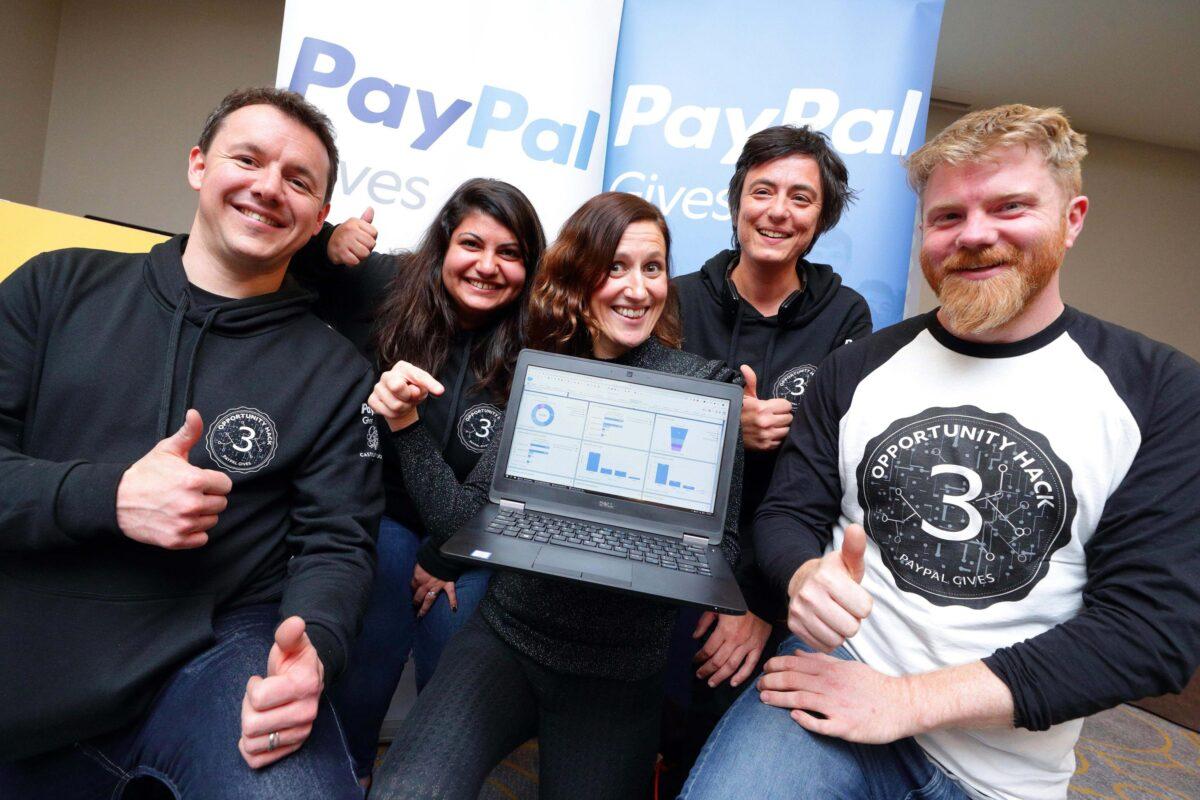
PayPal held its third annual charity hackathon - Opportunity Hack – this week in Dublin.