

Feel the fear… and do it anyway: Ray Ryan, Founder & CEO of The Noledge Group
Ray Ryan, Founder & CEO of The Noledge Group, talks to InBUSINESS about following his instinct and embracing technology
Back in the 1970’s, Ray Ryan’s career began at Dublin’s Dandelion Market where he sold pots and pans, microwave ovens and electric blankets. That was a time when appliances like microwaves were seen as the cutting edge of technology. Fast forward a few decades and Ray is the founder and CEO of software development and implementation company, The Noledge Group. The company operates two brands – OSSM, an enterprise resource management software company and Envisage, a financial software company. Solutions from The Noledge Group enable businesses to streamline and simplify their operations around sales performance and management accounts. From his days on a market stall to today, Ray has enjoyed a diverse career, underpinned all the while by technology.
Business at The Noledge Group is, says Ray, good. It’s very much a tech-based company, specialising in the sales and deployment of Oracle NetSuite, Sage Intacct, Sage 200 and Connections. Clients come from a range of industries. “It doesn’t matter if they’re a manufacturer, a construction firm, digital or financial – our solutions address full business requirements including automation, improving business process, reporting, enabling them to engage better with clients. We’re extremely busy and as a tech company, I believe we’re in a particularly good space. Technology is becoming more of a driving force every day, so we’re well placed.”
A digital future
Technology has always fascinated Ray – its possibilities, its ability to adapt and the way it can fundamentally transform how a company operates. His first job was at an electrical appliance company, where he quickly became known as the go-to-guy for questions on appliance parts. “I learned early on that if I memorised the parts on each domestic appliance, it would make my job a lot easier. I’d know exactly which unit belonged to which device.” His next role was at a toy company where he got his first taster of digital technology. With responsibility for stock control, Ray was put in charge of a toy brand called Milton Bradley. “It was one of the first brands with electronic-type toys and so straight away, I was interested. That job led me to a role in Omnitech, who distributed Atari Games in Ireland. Gaming software felt like the next logical step from electronic toys and I learned a lot.” The toy company had a large IBM computer, around which three women sat all day, keying in all the hand dockets. “It sounds crazy now that that’s all they were using it for, but it was still more efficient than the company down the road still writing invoices on a typewriter.” Using smarter tools to work more efficiently has been a key driver in Ray’s career, which took another step forward when he joined Memory plc. That’s where he was introduced to computers for business software. In his time there, one of the products available at the company was sold to a UK company called Sage. “I was used to green screen software but with Sage, I experienced colour software for the first time. I immediately thought to myself, this is my future. That was then I set up my first business, which was selling Sage products.”
Dick O’Neill, Ray’s father–in–law, was a founding member of the Smurfit Group. “He was an astute businessman and I said to him, I’m going out on my own. His advice to me was, there
are two things that you have to have in business – cashflow and enthusiasm. You can manage cashflow but if you lose enthusiasm, you’re dead. He said it’s easy to be successful in business, just do as you say you’re going to do. I’ve followed those two principles throughout my career.
Sometimes momentum is needed to encourage change, says Ray. “The change from punt to Euro and the move from DOS to Windows forced people to move with the times and embrace technology. I could see that technology was evolving and that it would have a dramatic impact on how we lived our lives. Those changes fuelled our success and they continue today; Covid proved the doubters wrong who said cloud technology wouldn’t allow people to work remotely. Getting involved with Sage was a huge step in my career as was finding the right moment to say, now’s my time to set up on my own. I think when you’re young, you talk about the things you want to do, but you need to stop talking and do it.”
Left Behind
We’re in the midst of an AI revolution and if the experts are right, the world as we know it will be transformed over the next decade. If businesses don’t start to review the types of systems they’re working with now, they may be left behind. “I’m very aware that’s a line of thinking that I’ve used all my life with customers. Huge changes were expected when we moved from Windows 7 or 8 to 10, but they didn’t really materialise. I think this time around, we’re in a different reality. The companies deploying ERP with built-in AI capabilities are going to have a distinct advantage over those who aren’t. If your competitor is more cost effective, more efficient in business processes and more profitable as a result, then you’re at a disadvantage.” This new AI world we’re about to find ourselves can be a daunting prospect. “There’s a lot of fear, uncertainty and doubt out there. People are being bombarded with statistics about AI and what impact it will have on their business. We need to keep the conversation going and provide people with practical, unbiased information from a tech perspective.”
Over the years, Ray has seen the evolution of an entire generation of tech entrepreneurs. He’s witnessed them transform from starry-eyed dreamers chasing fleeting ideas into a new breed of visionaries who prioritise building resilient and thriving businesses. “Ireland is truly a country filled with business pioneers. As a nation, we’ve got this ability to punch way above our weight. That’s something I’ve seen all my career.” The Noledge Group employs over 40 people and supports more than 350 business customers in Ireland and the UK. The company has offices in Belfast and Dublin and is about to appoint its first UK MD. “Within the next 10 months, we’ll open our first office in the UK. Our software is ideal for businesses that are planning to grow; we’re now putting solutions in countries as far away as Bulgaria. Our clients are growing in these marketplaces.”
Plans are also in place to launch a new company later this year. “We have developed a software specifically for the retail sector. It automates and makes business easier for retailers in the convenience store sector. At the moment, we’re in over 600 stores with it in Ireland and the UK. Our aim is to be in 10,000 stores within three years.”
Sub-header
Wise Words
“A lot of people think technology is a static thing, but it’s not. It’s ever–moving, ever-changing and improving. The more you invest in it, the bigger your return is.”
“What am I proud of? My people, full stop. I’m so proud of my team and their achievements. Some have been with me almost 25 years. There’s a vast wealth of business experience in our group and an understanding of technology and what it can do for you.”
“For the start–up guy who’s gone and done it, my biggest piece of advice is don’t be afraid. Feel the fear and go for it. And most importantly, do as you say you’re going to do.”


Sweet relief - Tonstix

An idea for a lollipop that would help relieve children’s coughs and colds has evolved into an award-winning product sold in thousands of retailers across the country. Sinéad Crowther talks to InBUSINESS about export potential, growth at home and why hard work pays off
For most parents, the start of the school year isn’t just about organising uniforms, buying new lunchboxes and getting used to a new routine again. It’s about preparing – both mentally and practically – for coughs and colds season and dreading the illnesses that spread like wildfire once all the kids are back together again. Sinéad Crowther, Founder and CEO of Soothing Solutions, doesn’t share that dread. Back to school season is her busiest and most profitable time of the year, when pharmacies, supermarkets, health-food stores and other retailers sell her products to parents looking for a solution to soothe their child’s cough or sore throat.
Sinéad and her business partner Denise Lauaki set up the business in 2017. With over two decades of experience in community pharmacy under her belt, Sinéad saw a gap in the market for a natural, effective product for common, seasonal illnesses. “I got the idea for Tonstix after spending 20 years talking to parents and feeling their frustration at the lack of child-friendly products for common illnesses. There just wasn’t an over-the-counter product that would soothe that type of discomfort in children. Once I had my own children, I shared that frustration and thought, someone has to do something. It turned out that someone was me,” says Sinéad.
After her son had a serious accident, Sinéad left her role as a Pharmacy Technician. “I was on lone parent benefits as I was too scared to leave him when he got out of the hospital. The idea for Tonstix was in my head at this stage and so I just decided to see how far I could take it. I wasn’t thinking about the big picture or the longer term, it was just something to focus on. I got really interested in the idea and began using my network in pharmacy to find out that if I was to go ahead and develop a product like this, would pharmacies stock it? The answer was a resounding yes.”
Tonstix is a dissolvable, all-natural, jelly pop that provides comfort to children with common coughs, colds and sore throats. The pop encourage the sucking reflex which facilitates lubrication of the throat and contains honey, known for its soothing properties, along with Vitamin C and Zinc. As it dissolves, the pop create a coating that temporarily supresses distress and comforts irritable throats. Shaped like a stick person, its design prevents a child from inserting the pop too far into their mouth. Sounds clever – but how did a good idea evolve into a physical, on shelf product?
“My background is as a Pharmacy Technician, I had no experience in product development so taking the idea to a product on shelf took a long time. We had to ensure it complied with regulations and that it would appeal to children. We worked alongside a food scientist to ensure the product’s efficacy and safety. As a lone parent, I had zero capital at the start; securing funding for R&D was difficult.”
Eventually her good idea started to take root. A priming grant from her local LEO along with HPSU funding from Enterprise Ireland and approximately €800,000 in private capital from a seed funding round, gave the business the boost it needed. “It’s been a journey with finance. Again, I knew nothing about running a business or trying to raise funds. At this stage, I could write a book about it! It’s been a steep learning curve, but I’ve really enjoyed that element of it. I can’t imagine going back to a regular 9-5 role where you just do your job and go home. It’s hard work but I love it.”
That hard work is paying off. In 2023, Sinéad was named the Enterprise Ireland High-Potential Start-Up (HPSU) Founder of the Year. Judges described her as an excellent example of a founder with a clear pathway to scaling globally and someone with the potential to become a world leader in her field. Tonstix, which is manufactured in a purpose-built factory in Dundalk, Co Louth, is sold in pharmacies and retail stores across the country and in 2024, the product launched in 110 Tesco stores. They’re also available in every Holland & Barrett store. “We’re also exporting to the UK and Malta and we’re talking to distribution partners for expansion into Europe. Our sights are on further growth in the next 12 to 18 months; we already have huge listings at home but we want to expand and grow our presence in Ireland and abroad.”
The business currently employs a team of five and that figure is growing. In 2024, the business launched a second product, developed for children with travel sickness. Tonstix Travel Pops contain a different formulation to the original product, ideal for use on flights for children suffering from ear popping. Feedback from parents has been excellent, says Sinéad, and there are plans in place to launch further products in 2025 and beyond. “We expect to launch the next product much quicker than our first two; we have the experience now and we also have the support of our partners.”
Sinéad attributes the success of Tonstix to delivering a new, convenient solution to a problem faced by parents all over the world. “I saw a very real gap in the market for a child-friendly solution for children’s health issues. It might sound niche, but that niche is global. Children are responding to the products, they’re happy to use them and I think that’s the key. Throughout the whole process, we kept the user experience front and centre and that’s why it’s been so popular.” The plan is for Tonstix to become a household staple, a pop that’s always on-hand for when seasonal illness strikes. “With the investment we’ve secured, with our growing listings and the fact that we’ve started exporting, that ambition is becoming a reality. I. think our story really shows what can be achieved when you believe in your product set your mind to making it work.”

Hanging greenwashing out to dry: Irish fintech Miagen
Hanging greenwashing out to dry: Irish fintech Miagen has launched a new platform to help businesses navigate new sustainability reporting obligations and avoid falling into the greenwashing trap. Joseph O’Connor spoke with its commercial director, Ciara Hogan, to find out more
Forty years after environmentalist Jay Westerveld first coined a term to describe businesses using spin to exaggerate their environmental credentials, the practice of greenwashing might be on its way out. At least that’s one goal of the EU’s new Corporate Sustainability Reporting Directive (CSRD), which is designed to improve access to high-quality, reliable and comparable sustainability data from businesses throughout the EU and beyond.
The directive came into force in Ireland on July 6th 2024, and establishes a harmonised EU-wide framework, requiring large and listed companies to make extensive annual disclosures on environmental, social and governance (ESG) matters. With commencement dates fast approaching, many businesses are now playing catch-up.
One company using technology to help businesses navigate the new regulations is Irish fintech Miagen. In July, it announced an investment of €1.8 million in the launch of GreenGen, a tool for streamlining compliance with the CSRD and other ESG reporting frameworks.
Companies subject to the CSRD face three key challenges, according to Ciara Hogan, Miagen’s Commercial Director. “It comes down to the data available, time and resources,” she says.
“The CSRD is instructing these companies to do a double materiality assessment, which hasn’t been done before. That’s not only looking at your financial implications, but also the impact of your activities on the environment and society, and asking you to consider everyone within your value chain.”
These new reporting requirements mean companies must collect over 1,200 data points, a scale of reporting not many businesses would have ever managed. Miagen says its new product provides an interactive reporting hub that will vastly reduce the time and costs required for the labour-intensive processes associated with collecting, managing and streamlining this data.
Companies can integrate the hub into their systems using customised APIs, get AI-driven guidance on the 1,200-plus data points and have peace of mind about the integrity of numbers.
An obvious tech fit
Developing tech that helps businesses navigate CSRD was an obvious fit for Miagen, given its experience in regulatory reporting for major industries like aviation leasing, shipping and airlines. “We’ve been working with finance teams for the last 21 years, so we’re very familiar with these regulatory requirements and with deadlines, people under pressure, and ensuring the integrity of figures,” says Hogan. “It was second nature to us, so it only felt right to move into this space.”
While the new reporting job falls naturally under the remit of heads of ESG, not all companies have that role in-house. More often, the task is landing on the desks of chief financial officers, many of whom are scrambling to understand the CSRD requirements. To fill this knowledge gap, Miagen provides on-site training on using the platform, charting a company’s activities and tailoring it to their specific needs and industry.
“What we’ve seen is that because finance teams are so familiar with regulatory deadlines,
they’ve now just inherited this role,” says Hogan. “Senior leaders think that because it’ll be part of their annual report, the finance team can do it. The message has to be that it’s not the kind of task that can be done at the side of a desk or on the back of an envelope. This has to be taken seriously and brought into company strategy.”
Backing up your credentials
In recent years, as climate anxiety drives the purchasing decisions of more environmentally conscious consumers, the practice of greenwashing among opportunistic companies has gone into overdrive.
Recent research by the ESRI and Trinity College Dublin found that when consumers were trained to identify greenwashing, they became more suspicious of genuine claims. That means authentic sustainable brands that consumers might not be familiar with struggle to convey an authentic message.
The CSRD will ensure companies are not cherry-picking or twisting data for PR purposes, instead reporting like-for-like results and hopefully building trust among consumers again. “When people were looking at ESG reports, there was nothing to substantiate the kind of green credentials that some organisations are claiming,” says Hogan.
“The CSRD and other regulatory frameworks that have come before it are really looking to standardise and harmonise these reports. That means making the language consistent and making sure that companies are actually comparable. I think it will give companies the opportunity to bring ESG and those metrics into their business strategy.”
According to Hogan, the new framework and Miagen’s technology will empower businesses to make informed decisions that prioritise ESG and support scaling businesses with a sustainability focus. It will also help enterprises gain greater insights into their carbon footprints and become greener businesses.
“They’ll be able to mitigate any damage to their reputation by being non-compliant,” says Hogan. “They’ll be able to highlight any risks to their own business or risks of working with companies whose goals and strategies don’t align with their own.”
Hogan advises companies subject to the CSRD to act now rather than later. “This is a really big exercise,” she says. “It will take a while to get your ducks in a row, so you need to act fast. Ask yourself, ‘is your company assurance ready?’ Because it’s not only about getting the report ready, you have to stand over the figures and policies that you’re reporting on, so you need a platform that will facilitate that.”

Icon of Irish business: A well known figure in Galway and beyond, Mary Bennett
Icon of Irish business: A well known figure in Galway and beyond, Mary Bennett’s success is testament to her entrepreneurial spirit and commitment to supporting local culture and craftsmanship
Although she originally hails from Rockvale, Co Clare, Mary Bennett is an icon of Galway business; now in her mid-eighties, she only retired after selling her iconic shop, Treasure Chest in 2022. But she certainly hasn’t been idling since, keeping busy as ever with charitable ventures. After over 50 years in business, she doesn’t know any other way. Here she shares some of her favourite memories and best advice, from her full and impactful life in business.
Customer Service
Bennett began her career in the Great Southern Hotel and still credits the hotel trade with instilling a penchant for doing things to perfection and a level of customer-focused service that would serve anyone well, regardless of their business. It was while at the hotel that she began running a little gift shop, selling Irish crafts under the stairs. It was a novel idea at the time and one that took off. “The best thing I ever did was to get into the hotel,” she says, of her early training ground. “You have to do everything and everything has to be done properly.”
Finding a Way Around Blocks
However, her career could have stalled there, as she left the hotel in 1961 after marrying her husband Eddie. While the Marriage Bar was only strictly enforced in civil service and education until 1973, the societal expectation for married women to give up work was still strong across the private sector. However, where there’s a will there’s a way and it didn’t stop budding entrepreneurs from setting up their own business.
Bennett first set up a guest house in Salthill the year after her wedding and in 1966, she took on a lease on a shop in Galway, which was the beginnings of the Treasure Chest.
Her ability to plough through in a male-dominated business environment speaks to her determination and the changing attitudes toward women’s roles in society during that era.
Take it Step by Step
From leasing her first shop premises, to buying and then extending over the years, she built the Treasure Chest up bit by bit. “I never had a plan,” she says. “I never wanted to overload myself. I progressed slowly, but every year I needed to have progressed a little and that was my mission… everything we made went into the shop.”
Seek Out Quality
The shop became an integral part of Galway’s retail scene, offering high-quality Irish gifts, crafts and fashion. Located on Shop Street, one of Galway’s busiest and most central shopping areas, the store stood out not just for its quality products, but also for its distinctive window displays and personal customer service.
Over the years, Bennett’s shop became an iconic tourist destination and an essential shopping destination for locals too, with its mix of Irish craft and artisan products, gifts and fashions. Bennett’s vision and dedication to quality helped make Treasure Chest a landmark in Galway’s city centre.
Stand Out
It was a trip to New Orleans, where she took part in the St Patrick’s Day parade and observed some of the highly decorative architecture there, that inspired the iconic highly decorated exterior of Treasure Chest – the Wedgewood blue and decorative plasterwork swagging was surely one of the most memorable shop exteriors in Ireland.
Bennett’s care for the streetscape extended to campaigning for a removal of neon signage from stores in the city centre and she came up with an excellent motivator for other shopkeepers who came on board with her urban beautification plans – the shopfronts were photographed and became part of a bestselling poster of Galway shopfronts.
The Power of Networks
Over the years Bennett has been active participant in business life beyond her own shop floor, not just in Galway, but also on an international level. Attempting to detail the scope and breadth of her CV would turn this article into a very lengthy list, but to give an idea, over the years, she has participated not only in Galway Chamber (as President and also serving two years as National President of Chambers Ireland); helped set up and served as executive chair of Galway Tourism and the international network of tourism professionals Skal, of which she became the first female World President in 2002; she has also held directorships of Ireland West Tourism, Bord Failte and Aer Lingus. She was presented with the freedom of the city of Galway in 2011, an honour she shares with Douglas Hyde, Eamonn de Valera, Hillary Clinton and Ronald Regan, among other notables.
She advises anyone in business to get involved with local networks. “You can learn so much from them,” she says. “Be curious and always keep your mind open to what you can see happening around you, keep an eye on the development that goes on and how they progress it.” Like a heat-seeking missile, Bennett suggests “Always try and be involved with somebody that’s creative or that you feel they have initiative.”
She adds: “I think it’s important to work in projects locally, whether it might be the local Chamber, or whatever it is, help and get enthusiastic about the work they do, and this way that people will seek you out and help you as you go.”
Moving with the Times
From travelling the world, Bennett found beautiful products abroad and expanded her range from Irish crafts, always conscious of keeping up with changing customer needs.
“When I started, it was all shamrocks and the Irish harps on products. As we progressed in business, we had to continually move forward and changed to stocking best of gifts that we could find, be they European or otherwise, for weddings, birthdays and christenings. Then the wedding gift section became far more practical; people getting married wanted useful products and a lot of them wanted cash, which killed a certain amount of gifting,” she explains as an example of how her stock evolved over the years.
She recalls with fondness her innovative Christmas shop, with high–quality decorations imported from the US, long before such a range was widely available. “In the beginning we were unique and we made our name with quality,” she says. But nowadays, for many customers, cost is more important than quality or provenance, and retail has changed.
Know When to Cash in Your Chips
After over 50 years of running the landmark Galway store, Bennett made the decision to sell the Treasure Chest in 2022. As she tells it, it wasn’t her wish to slow down that spurred the decision, rather that it was becoming harder to find the kind of quality craft products she wanted to sell, at prices that made business sense. The challenges facing retail with rising costs for quality products and the global shift towards fast fashion led to a decline in demand for and availability of Irish-made items.
The Treasure Chest closing marked the end of an era for one of Galway’s longest-running and best-loved businesses. “I enjoyed every minute,” she says of her career, “because I love something different and I love to be on top of what I’m doing. I’m not a perfectionist, but I try to find the right way to do something because that was the culture I was brought up in.”
Mary Bennett’s career is a testament to her entrepreneurial spirit and commitment to supporting local culture and craftsmanship. The Treasure Chest wasn’t just a shop; it was a symbol of Galway’s vibrancy, attracting tourists from around the world and becoming a key part of the city’s commercial history. Through her dedication to showcasing Irish-made products, Bennett helped preserve and promote Irish heritage on a local and international scale.
While her direct involvement in retail has come to an end, her impact continues through the legacy of Treasure Chest and her influence on Galway’s business landscape. Truly, an icon of Irish business and tourism.
Roamr - Unapologetically globally ambitious

A new Irish-founded accommodation platform with big-name backers has set its sights on disrupting the world of corporate travel. Joseph O’Connor caught up with Roamr co-founder Stephen Dooley to find out more
If anyone doubts how groundbreaking Airbnb and Uber have been for their respective industries, just ask Stephen Dooley. He’ll share an anecdote about how, as a child, he was constantly warned against getting in the car with or answering the door to strangers, only to see in adult life two tech companies rip up the playbook.
Airbnb and Uber’s ability to shift people’s innate behavioural habits struck a chord with Dooley — not only did their trust and adoption strategies form the focus of his PhD research, but they also planted a seed for his start-up.
So, too, did the pandemic. At that time, Dooley was taken by how many employers were letting staff work from anywhere in the world but also frustrated by the financial barriers making it impossible for most.
“That was my personal pain point,” says Dooley. “Speaking with friends, they faced the same issue of having to spend thousands on accommodation while paying rent at home. It was probably my PhD research brain that put me in customer discovery mode, and I thought, ‘is there a play here? How do we solve the piece, and what would a solution look like?’”
These were questions Dooley had when he met Jason O’Gorman through the Y Combinator founders matchmaking programme. With O’Gorman’s decade-long engineering experience building travel and hospitality start-ups, it was the perfect match — and Roamr was born. Seven months later, the pair had a product built for just €15,000 and in the hands of their first paying customers, with an ambitious plan to rip up the business travel playbook.
A cost-cutting platform
Roamr is a corporate travel accommodation platform aimed at helping companies cut costs by paying staff to host their colleagues instead of footing expensive hotel bills. Its B2B proposition is to save client companies around 30 per cent on accommodation costs while the employee host and business traveller get a slice of the savings. Roamr’s primary target market is big tech — companies with deep pockets and a global presence.
“The example we tend to give is a tech company with someone in Dublin,” says Dooley. “They need a person in San Francisco for a month. It’s going to cost $10,000 on hotel bills. Instead, they could be hosted by a colleague or friend in that city, and then we redistribute the would-be hotel cost to those two people’s pockets and back to the company.”
To break it down further: The host gets $3,000, the travelling employee gets $3,000, and the company saves 30 per cent on the trip cost after paying Roamr a service fee.
“We use what we’re calling a pay-as-you-save model,” says Dooley. “Unless the company has driven a saving, we won’t charge them. It helps us pitch the CFO in a way that makes it a no-brainer. You get to push 30 per cent of your cost straight to the bottom line, but you get to deliver that news in a way that makes you look like a hero to your workforce because you’ve created financial opportunities for them.”
Roamr also has a B2C SaaS model, which focuses on personal trips with home exchange. That means employers pay a flat fee to unlock the home exchange service for their staff, many of whom will have a work from abroad policy.
According to Dooley, the platform’s frontend is not dissimilar to Airbnb — “because familiarity breeds trust” — but the backend is more B2B-focused, complete with a customized dashboard and admin controls for CFOs and chief people officers.
Big name backers
The very nature of Roamr’s business means it has massive global ambition, which is also reflected in the big names backing and advising the start-up. They include former MD of Meta Ireland Rick Kelley, Eoghan Quigley of KPMG, former Shopify executive John Riordan and John Collins, formerly of Intercom and Ramp.
Roamr has also secured partnerships with leading players in the future of work like Deel, Oyster, Dell and Remote and raised over €500,000 in an oversubscribed pre-seed round earlier this year.
Dooley says everyone at the cap table has specific expertise that can unlock a different piece for Roamr. “We focused on the blind spots of the business,” he says. “The obvious one was, ‘How does the buyer think about rolling out this technology?’ We need to understand that perception, which is why we built relationships with CPOs in big tech companies like Google, Netflix, Workday and Cisco.”
While Dooley acknowledges riding the coattails of Airbnb’s disruption of the accommodation sector, he says they offer a very different proposition. “If you travel right now for work, you have a choice. Will I stay in a hotel or an Airbnb? There’s actually not too much of a reason to choose one or the other nowadays. We’re saying, ‘Hey, you can travel for work, and you can have one of those or if you choose Roamr, you get paid. So it’s a strong enough differentiation.”
The other differentiator is trust. Roamr offers a much more gated community. “It’s not a bunch of college students that are going to come to your home and party while they’re there,” says Dooley. “This person is a working professional. So there’s higher trust in that community for us.”
Roamr currently has a team of four with plans to use its funding to increase its headcount. It has users in 96 countries, which Dooley says proves its global application.
“We are unapologetically globally ambitious with this, but you have to be by default,” he says. “The core value proposition is unlocking the globe for people, so you must have that global mindset. Our metric for success is whether when people travel, they’re going to think, ‘Am I getting a Roamr or a hotel or an Airbnb?’ Hopefully, in that order. That probably sounds lofty and delusional, but ultimately, it’s what we need to be.”
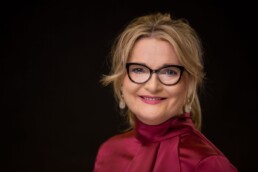
The new voice of Irish business: Margaret Considine, the new President at Chambers Ireland
The new voice of Irish business: Margaret Considine, the new President at Chambers Ireland, talks to InBUSINESS about leading the organisation into an era of excellence
Congratulations on the new role. Are you optimistic about the business landscape going into 2025?
Thank you. Yes, I’m feeling very positive. I’m 23 years in business and as an SME, I’ve been through two recessions. Part of my role is about inspiring people to be their very best selves so I have to practice what I preach. I truly believe that we learn nothing on a straight road; you learn on the crooked roads and you learn the most when things go wrong or when you’re faced with complexities. It’s a privilege to be leading Chambers Ireland; I’ve been in the chamber movement for over 17 years so I have the experience and knowledge to do the role effectively.
What are your ambitions as President?
To lead a collaborative board that is truly the in-touch representative voice of the businesses in the chamber movement in Ireland. Over the next six years, the board will continue to represent the whole country and to grow the relevance of Chambers Ireland across Ireland. I also aim to strengthen the voice of Ireland Inc at a European level and ensure that our advice on manifestos is taken into account. Economic success is the overall ambition, as is achieving social success – we’re a country of people, not just of businesses.
As a small business, what are some of the challenges you’re facing?
The greatest challenge to everybody is uncertainty. The cost of doing business is crippling for SMEs, as is managing cashflow. Many small businesses are not Chamber members, but I truly believe that every business in the country should be a member of the Chamber. The benefits and the support I have received over the years has been excellent. Ireland is a country of nascent entrepreneurs. I think 98% of the businesses in Ireland are SMEs. We need to be able to support those small businesses and so tackling the cost of doing business is really important. Building future skills is also critical and we need to start developing quick pathways into careers like nursing and engineering. University degrees shouldn’t be the only option, micro-credentials need to be pushed far more than they are. As someone who’s in the learning and development field, we need to look at the way in which we educate and train our people to be solid business people and entrepreneurs for the future. Strengthening our international connections is also important because ultimately, we are an island and we need to stay connected to Europe and to our stronger business partners.
When did you set up EQuita Consulting Ltd?
I set up the business 23 years ago, having come out of industry. I had worked with a variety of large brands including McDonald’s, Bailey’s and Mercury Engineering. During my time in these various roles, I saw an opportunity to develop a solution for an issue that I was seeing, which was a lack of good quality advice to problems businesses were encountering. The training available to businesses was also very poor. The name of the business comes from the word equality, which is around removing barriers and upskilling people to give them access to every tool, technique and opportunity that they need in order to live their best life. We have three divisions – a consulting division, a training and executive education division and s commercial division.
How has the company grown in those years?
It’s grown significantly. We call ourselves a boutique brand and for the most part, we fly under the radar. For example, we recently produced the Probation Strategy but you would never know it was us. We hire really brilliant people and our associates are probably some of the best in the world. At the moment, we have about 20 associates that are with us over 20 years, including world renowned author Owen Fitzpatrick and Professor Andrew Kakabadse.
What do you attribute the success of the business to?
Agility, service, customisation and personalisation. We’re a small business, we’re not pretending to be huge. You’ll never find our name in 44 corners of the world, but what you will find is our ideas in 44,000 people’s heads that are turning concepts into transferable ideas day to day in the workplace. Our business has always been around trust and return on investment. We never have a difficulty selling to people because we come referred. Every piece of work we do is custom built to the client. We don’t charge for design. We don’t charge for customisation, but we make sure that it fits. Some of the products that we have developed for clients have been accredited and some have won prestigious awards, such as Pace which is accredited in over 50 countries.
Did your time in South Dublin Chamber as President prepare you for your new role?
It absolutely did, it was the runway that enabled me to take on the role. Firstly, it gave all the chambers an opportunity to get to know me, to see if they could trust me, to see if I’m the type of business leader that they would have integrity in. It gave me practice in running a chambers and the nuance in politics that’s required. South Dublin is the third biggest chamber in the country, so it was exciting to be part of it. Working with the CEO there, Peter Byrne, was an amazing learning pathway.
Do you enjoy what you do?
I love it. Alongside the day job and my new role at Chambers Ireland, I give up a day of my week to voluntary work. I consider this my way of giving back. I chair the All-Ireland Business Foundation and I’m also chair of Tallaght University Hospital Foundation as well. I’m a former chair of Making Connections, a brilliant small company that alleviates loneliness in the elderly. I really believe that most of us have infinite capabilities and that with the right support, we can achieve so much. I’m proud of what I’ve achieved in my career and I intend to build on those achievements in my role as President at Chambers Ireland, for chambers across the country.

Building bridges to better wellbeing
Building bridges to better wellbeing
Tobba Thorbjorg, CEO of Kara Connect, speaks to Jennifer McShane about her journey from politics to pioneering mental health platforms, challenges and aspirations for the future
How did you get involved with Kara Connect?
I’m a cognitive psychologist by training, and my career started in researching brain development in children, adolescents, and adults. From there, I found myself in politics — something I never thought I’d do — but it’s such an important arena for change, especially in the Nordic systems where public support is essential.
I was a councillor in Reykjavik, Iceland, for 12 years and also advised the Minister of Education. My focus was always on improving access for children who needed specialist help, whether for autism, speech problems, or psychological and occupational therapy. I saw gaps in the system, particularly in how funding and support were structured, and when I left politics, I decided to address those gaps through digital platforms. That’s when Kara Connect was born.
What does Kara Connect do?
Kara Connect has three main components. First, it’s a secure workstation for practitioners to conduct online meetings. We have about 3,000 practitioners using it across 60 different specialities, from speech therapists to psychologists. Secondly, we’ve created wellbeing hubs tailored to companies. These hubs act as a gateway for employees to access help, such as mental health support, communication skills training, or menopause specialists. Each hub is customised to the company’s needs, and employees can connect with professionals who speak their language and understand their culture. Some of our first customers said whatever they need, it’s on the platform – they love that. And thirdly, HR managers can monitor the platform’s usage to understand what their workforce needs. Privacy is key — conversations between employees and practitioners are completely siloed. This ensures trust, which is vital for the platform’s success.
What inspired you to create the wellbeing hubs?
The shift to digital services has fundamentally changed how people access care. Gone are the days of waiting in line for neighbourhood services; everything happens online now. This has made workplaces the first place people look for help, especially when public systems have such long waiting times. We also noticed the unique challenges Gen Z has brought to the workforce. This generation is incredibly talented but faces higher levels of anxiety, largely due to social media. We’re seeing a lot of ‘quiet quitting.’ Employers are grappling with how to support them, and that’s where our wellbeing hubs come in.
What has the response been like from companies?
Honestly, I was a bit nervous when we launched the wellbeing hubs. I wondered if employers would feel that providing this kind of support should be the health system’s responsibility. But the feedback has been overwhelmingly positive. Employers want to help their teams feel safe and supported. They understand the value of preventative measures — not just for their employees’ well-being but also for their own peace of mind. Many HR managers tell us how much time they spent on persona issues before adopting Kara Connect. Now, they can offer their employees a clear pathway to help without taking on the responsibility themselves. That’s a win-win for everyone.
What challenges have you faced in leading this company?
The biggest challenge right now is navigating budget constraints. Companies are under pressure to cut costs, but they also see the growing need for mental health support in the workplace. It’s a delicate balance. Another challenge is educating people about what we offer. We’re not just another Employee Assistance Programme (EAP). Our platform has a 20% engagement rate, which is double the industry standard. That’s because we focus on live, human support, and most importantly, human connection — no videos, no AI. It’s all about real connections with practitioners.
What have been some of the highlights for you and the team?
It is incredibly rewarding to see the impact our platform has. On average, 55% of bookings on our platform are for mental health professionals, which tells us we’re addressing a real crisis and making a difference. Another highlight is our team. We’re a small but incredibly aligned group of 24 people spread across Dublin, Reykjavik, and a few other locations. Everyone is so passionate about what we’re doing – I’m really proud of what we’re building.
What’s next for Kara Connect?
We’re focused on nurturing the practitioner side of the platform. I’d also love to dive deeper into research — understanding what interventions work best and demonstrating the value of investing in mental health support. We’re already seeing great results, but I’m eager to back those up with more data. On a broader level, we’re continuing to expand. Although the wellbeing hubs are relatively new, they’re already gaining traction. We want to create something people can trust where they can access help easily and privately.
What advice would you give to others looking to innovate in this space?
Don’t underestimate the importance of trust. It is really important and you need to build systems around that. Stick to your passion because this is an evolving space, and it’s easy to get distracted.

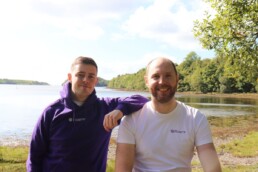
Ciara Walsh and James Fahy, JUSTTIP puts money back into the pocket of those that need it most.
Just the job: Founded by Ciara Walsh and James Fahy, JUSTTIP puts money back into the pocket of those that need it most. James chats to InBUSINESS about expanding internationally and helping businesses reduce their costs
Where did the idea for JUSTTIP come from?
The idea came from our own experiences really. Back in 2021, I wanted to leave a tip in a coffee shop but I didn’t trust that it would go straight to staff. I began to question why there wasn’t a way of leaving a tip directly without the need for cash. My Co-Founder Ciara [Walsh] also worked in hospitality from the age of 15, so knew what it was like to not get her tips. That’s where the idea for JUSTTIP came from; from the start, our aim has been to put money back into the pockets of people that need it the most, in real-time. We launched in July 2021 and within a week, we had processed about €6,000. Within a month, we organic customers from the UK looking to use our solutions. Today, we’ve onboarded 400 establishments and over 7,000 staff across Ireland and the UK.
You’ve also just launched JUSTTIP Flex. Can you tell me about the new solution?
It’s a new hand-held, mobile tipping solution that’s been developed for restaurants, pubs and hotels offering table service. It lets customers choose their tip amount in a separate transaction from paying the bill. Like the fixed machine, customers can tap with a bank card, phone or watch to leave a tip in just three seconds.
Are there plans to launch any further products?
We have a number of products in the pipeline. There’s lots that we want to do. We’ve just hired someone internally on the product side, so there’s lots of new innovations on the horizon. Watch this space!
What do you attribute the success of the company to?
I think it’s just a really simple solution; employers manage tip distribution using the employer portal to monitor tip collection and distribution. For employees, tips are paid directly to their bank account every Tuesday. Tax management tools are also available to help with calculating liability. We’re doing what we set out to do, which is making a massive difference in people’s lives.
How does JUSTTIP help businesses reduce costs?
It saves business owners the 11.8% PRSI liability due on every tip. Just think about a business that’s doing one million in revenue and 10% of that is tips – that business is paying anywhere between €5,000-10,000 a year in additional payments. In December 2022, legislation was passed in Ireland around the sharing of electronic tips and gratuities. Employers must now distribute tips to employees in a fair manner and similar legislation is going live in the UK later this year. The legislation definitely boosted our business and I think it showed us that we were definitely on the right track.
Are you planning to expand the business?
Yes, we’re expanding at the moment and planning to launch into regions outside of Ireland and the UK. Sustainable growth is key; we previously tried to scale into the US but we were burning through cash, with no revenue. Since we set up the company, I think we’ve both learned a huge amount around making a company sustainable. We also have 14 team members at the moment, that number will increase as we expand.
Who are your customers?
We have all types of businesses on board – hospitality, barbers, hairdressers, coffee shops. Quite a few of our customers have come to us organically. We have all the Pret a Manger sites in Ireland, along with Insomnia coffee shops. Our solution also reduces a business’ administrative burdens. The average business spends anywhere between three and six hours a month on tips admin, putting tips aside and pushing them out to individualised bank accounts. With JUSTTIP, that time on admin is reduced to about five minutes a week.
How daunting was it to set up a company at just 19 years old?
I think we had the idea and just went with it! I describe it like surfing. You start off paddling and then you get on the board and ride a wave. You never really stop to ask yourself why you’re surfing, you just think, I need to not fall off. We established JUSTTIP to help people and to start a career for ourselves. Things seemed to fall into place, we’re going with the flow and it seems to be doing some good in the world. Of course, there are some areas that are challenging; people management at such a young age can be difficult. If you don’t have the experience, then you can be taken advantage of.
Have you availed of any financial supports?
Funding at the start was very difficult. Would you give a quarter of a million quid to a couple of youngsters with no business plan or customers? As we grew though, we managed to attract those supports and today, we’re a HPSU client (high potential start up), the youngest in Enterprise Ireland’s portfolio.
What are the ambitions at JUSTTIP?
The goal is to become the de facto, like Hoover back in the day. Hoover was the first vacuum cleaner brand to come to market and became synonymous with the product. We want to be known as the people delivering equitable payments to employees. Our aim is to build market share around an ethical brand that’s looking to actually help people.

Furthr CEO Martin Murray on how the not-for-profit is helping to shape the next generation of Irish business success stories
Going Furthr : Furthr CEO Martin Murray on how the not-for-profit is helping to shape the next generation of Irish business success stories
Can you tell me about Furthr and the services you provide?
Since 1988, Furthr has been supporting the founders of innovative start-up and scale-up enterprises. Our mission is to deliver game-changing impacts for founders that enable them to become investor ready and to scale. We are a very commercially-minded, not-for-profit organisation. Most of our activity is funded by the Department of Enterprise, Trade and Employment and Enterprise Ireland. At Furthr, Founders Go Free. Our work is across the dimensions of Accelerating, Funding and Connecting. Our Acceleration team consists of experienced serial entrepreneurs who provide the most impactful mentoring and advice available to entrepreneurs anywhere. In terms of funding, Furthr VC is the venture capital arm of Furthr. We’re the only organisation of our type with our own venture capital fund. The current fund is a €32m fund which has to date invested in 23 highly innovative B2B SaaS and Medtech companies. Furthr is also a founding partner and managing partner of the Guinness Enterprise Centre, the largest innovation hub in the state.
Where did the idea for Furthr come from?
Back in 1988 some visionary people saw the need to support indigenous entrepreneurship. Dublin City Council and Diageo were early supporters of Furthr. From humble beginnings Furthr has delivered an impressive list of firsts for Ireland, including the first private start-up incubator space in Ireland (1992), first university spin-out programme (1995), the first register of private start-up investors (1998) and the first seed capital fund backed by entrepreneurs (2017).
What’s your own background?
My early career was as an engineer working in telecommunications. In 1999 I commenced my entrepreneurial journey, co-founding Interactive Return, one of the very earliest digital marketing agencies. Our specialty was search engine marketing (this was before Google Adwords existed). Typically a sales call would begin by explaining what the internet was. With support from Enterprise Ireland, we took on clients in the UK and US. I sold the business in 2008 to Publicis, one of the largest advertising concerns in the world. From there I did a stint in Google in various roles including Head of Global Agency Sales Operations and Country Manager for France for SMB clients. I’ve been working with Furthr since 2017 as a mentor to many of our start-up clients and, more recently, I took on the CEO role. I’m also a proud son of The Liberties, where Furthr is now based.
What was the thinking behind the recent rebrand?
Furthr was formerly the Dublin Business Innovation Centre. We re-branded in 2022. We knew that it was time for a refresh. The Dublin Business Innovation Centre brand was poorly understood and the enterprise support marketplace had changed considerably since 1988. With the Furthr brand, we deliver game-changing impacts for founders and we do that across the dimensions of Accelerating, Funding and Connecting. It’s that simple.
How important are start-ups in the overall business landscape?
Incredibly important. Everybody recognises and acknowledges the economic miracle that Ireland has achieved over the last half century with FDI. Equally, it is recognised that FDI is hyper-mobile and vulnerable to factors well beyond our control. Indigenous entrepreneurship gives us the opportunity to embed innovation, wealth creation and job creation into the economic fabric of the nation.
Can you tell me about one or two start-ups you have helped scale and grow?
One of my proudest achievements with Furthr is the Innovate Accelerator Program, directed at female entrepreneurs and designed, developed and delivered by Furthr on behalf of Enterprise Ireland. Just two of the alumni from the program are Deirdre Lyons, founder of Examfly and Julie Garland, founder of Avtrain. Examfly is reinventing how people study for tax and accounting exams. Professional services firms such as PwC, Deloitte, EY, Grant Thornton and BDO are clients, across multiple jurisdictions. Examfly recently took on €1.5m in investment to aid its expansion while Avtrain, Europe’s leading drone pilot and operator training and certification body. is delivering the online training that will create a safe drone operating environment across Europe.
What are some of the challenges you face as a business?
As is the case with many of our start-up clients, the market opportunity for Furthr to add value is limitless, but our resources are limited. So, we have to choose carefully where we can have optimum impact. With greater resources we could contribute more to the transformation of the Irish economy to one based more on indigenous innovation and entrepreneurship.
What do you attribute the success of the company to?
Two things. The culture of the organisation and the incredible founders with whom it is our privilege to work. Furthr’s culture is all about supporting founders. That’s the North Star of the organisation. The founders with whom we work are a constant source of inspiration.
What are your ambitions for the business?
Plans are underway to raise a new fund in 2025, ensuring continued support for seed-stage companies. Simultaneously, Furthr Investor Network is seeking to build a new generation of angel investors who are ready to invest in Irish entrepreneurial innovation. Increasingly, we are seeking growth opportunities for our clients in overseas markets by leveraging our international network. Irish government policy is that Irish start-ups go further (excuse the pun)! By continuing to empower founders with the resources and supports they need to succeed, Furthr is poised to help shape the next generation of Irish business success stories.

Fergus Sheil, Director of the Irish National Opera, to talk about juggling arts and business
Joseph O’Connor caught up with Fergus Sheil, Director of the Irish National Opera, to talk about juggling arts and business, setting the tone for his team and inspiring the next generation of creatives
While artists and creative professionals aren’t known for their business acumen, they’re often the ones scrapping the hardest for funding. Musician, composer and conductor Fergus Sheil can testify.
As a successful Irish conductor carving out his career abroad, Sheil recognised that Ireland was one of only a few European countries without a national opera. Seeing first-hand what these organisations delivered for artists, audiences and communities, he was determined to see one established at home.
So much so that years later, in 2017, when the Arts Council announced it would fund a new opera company, Sheil and his colleagues had already laid the groundwork for a successful tender.
“What we did in the years before was play a very strategic chess game where we ticked a lot of boxes,” says Sheil. That included setting up small-scale opera companies, Wide Open Opera and Opera Theatre Company, bringing opera around Ireland, and commissioning some big-name writers and composers for productions.
Their pitch was successful, and the following year, the Irish National Opera was founded, with Sheil appointed Artistic Director. “We hit the ground running, producing seven operas in the first year, and we’ve kept going at a pretty good pace since then,” he says.
Irish National Opera is a registered charity with an independent board of directors and while the larger office engages between 200 and 300 people each year, it has 19 full-time staff. According to Sheil, the nucleus team’s expansion and contracting throughout the year gives the organisation the flexibility it needs to be financially sound and successful.
“I still think of the company as in its infancy,” he says. “We have no dedicated, purpose-built opera house in Ireland. So we still have a long but exciting road ahead.”
Splitting Roles
Sheil has produced over 80 different operas, including works by major composers from Vivaldi to Wagner, and over 40 works by living composers. His most recent was a successful run of Rigoletto at the Bord Gáis Energy Theatre. Despite his highly decorated career, perhaps one of his biggest accomplishments has been successfully running a company parallel to producing high-quality opera performances. So, how has Sheil found the juggling act?
“It’s taken me a long time to — I don’t want to say get good at it but — get comfortable with it,” he says. “I remember in my early days when organizing a project, you’d do everything yourself — contracting people, placing ads, doing all the marketing. I remember being in the middle of conducting a concert and thinking, ‘Oh, no, I didn’t bring the checkbook!’ It was very hard to divorce yourself from the creative side and be more practical.”
While Sheil still produces a couple of productions each year, which generally involve an intensive six weeks from rehearsal to performance, a big part of his role is budgeting for an organisation often planning 3-4 years in advance.
“It’s the same for any business, but knowing what you’re going to spend and sticking to it is really key,” he says. “There is a long history in Ireland and internationally of opera companies going bust,
which was a big worry for me at the start. You plan two, three, or even four years out because major singers, directors and conductors get booked up. It means you’re committed to money years out, and it’s a bit like a train leaving the station. It’s very difficult to call it back. So you have to be careful about what you plan and realistic about what you can afford.”
Sheil must be doing something right because, in its six plus years of operations, the Irish National Opera has never been in deficit. As an Arts Council-funded company and registered charity, the organisation plans to spend its entire yearly budget, which means little or no reserves, making operations all the more precarious.
“The pressure is on to put on a lot of opera,” says Sheil. “It makes you feel very fragile. Things could go wrong. Thankfully, they haven’t, but it’s a nerve-wracking game.”
People with Passion
Sheil puts much of Irish National Opera’s success down to hiring people passionate about opera — whether they’re working in accounting, marketing or admin. “They really need to know, understand and get opera,” he says. “When people send in CVs, one of the things I’m looking to see is, yes, are they qualified, but is there another element to what they do that leads me to believe that they would love, be passionate and committed to the work.”
In terms of personal characteristics, Sheil looks for people who show respect towards others — something he says the industry lacked in the past. “The arts can be quite a temperamental place with people who can be temperamental,” he says. “We try to work with people who are really respectful of others. That’s a change in opera compared to 20, 40 or 60 years ago when it was more autocratic with leaders barking orders.”
Sheil says he and his team strive to be collegiate, respectful, passionate and ambitious. “If I embody those traits in my work — if I’m passionate and driven but respectful of others, it reflects a lot. It’s important when you’re in a leadership position, that the tone you set and how you conduct yourself inspires others and how they work.”
Coming Full Circle
In 2023, Sheil was awarded an honorary Doctor in Letters from Trinity College Dublin, the university he first graduated from. Now, he’s come full circle, lecturing a module in career development in TCD’s music department. So, as a mentor, what qualities and values does Sheil instill in his students?
“Most of all, I try to give them some confidence and inspire them to believe that the ideas they have are possible to achieve,” he says. “That’s really why I’m doing it. I started out in Trinity myself, and I had lots of opportunities that led to great things. The music department has fostered a lot of really interesting outside-the-box thinkers and makers of music. So I wanted to do my bit.”
Sheil’s module, ‘From Page to Stage’, encompasses everything from building projects and putting teams together to getting funding, attracting audiences and marketing. Sheil says he wants to help students understand that the mechanisms are there to get your idea on stage. “There is a whole system of funding in Ireland. Of course, we’d all love it if there was more, but there are opportunities open to people.”
According to Sheil, education in his classroom is not a one-way process. He says he learns lots from the young people he teaches, understanding their motivations and perspectives, which often differ from his.
“I think that’s important, right across the board — to work with people of a different generation to you,” he says. “So often you get locked into a group think, believing there is only one way of doing things and thinking about the world. So it’s great to be challenged like that. I find it stimulating and interesting. I don’t know if the work I do makes an impression on them, but I hope it might at some point in their lives.”
When we speak, Sheil is just out of a rehearsal for Rigoletto and full of optimism and excitement, not only about the next performance but also about opera more generally.
“The thing that buzzes me about opera is that it’s so unpredictable,” he says. “I haven’t counted the numbers, but there’s probably between 150 and 200 people involved in putting on this opera, and it’s a combination of the talent of extraordinary people that will come together on that stage. That’s just such a rich experience.”
Three Key Lessons
Fergus shares three pieces of advice for those trying to make it in the arts, which can just as easily be applied to any line of business.
Always have ten ideas in your back pocket
“Don’t think there’s one way of doing something. Don’t approach your career in one way — know that there are many different paths. Don’t be afraid to go left a little because you might very well end up going back to where you were. Things won’t go in a straight line. Be flexible and respond to every opportunity.”
Try not to be the smartest person in the room
“If you’re collaborating with people who are smarter than you, you’re going to learn and develop. The natural, easy thing to do is gravitate to friends on the same level. See if there’s somebody a bit further up the career ladder than you, and reach out to them. You’d be surprised how many are willing to collaborate.”
Go big and ambitious
“In the arts, because of the limited funding available, we tend to make our ideas smaller so that they’re more achievable. I think the opposite. Go with your idea and make it bigger if you need to because it’s the idea that will get you the money. So, sometimes bigger and more ambitious is better. Keep your artistic integrity and your ideas really strong and see if you can get people to back you.”