
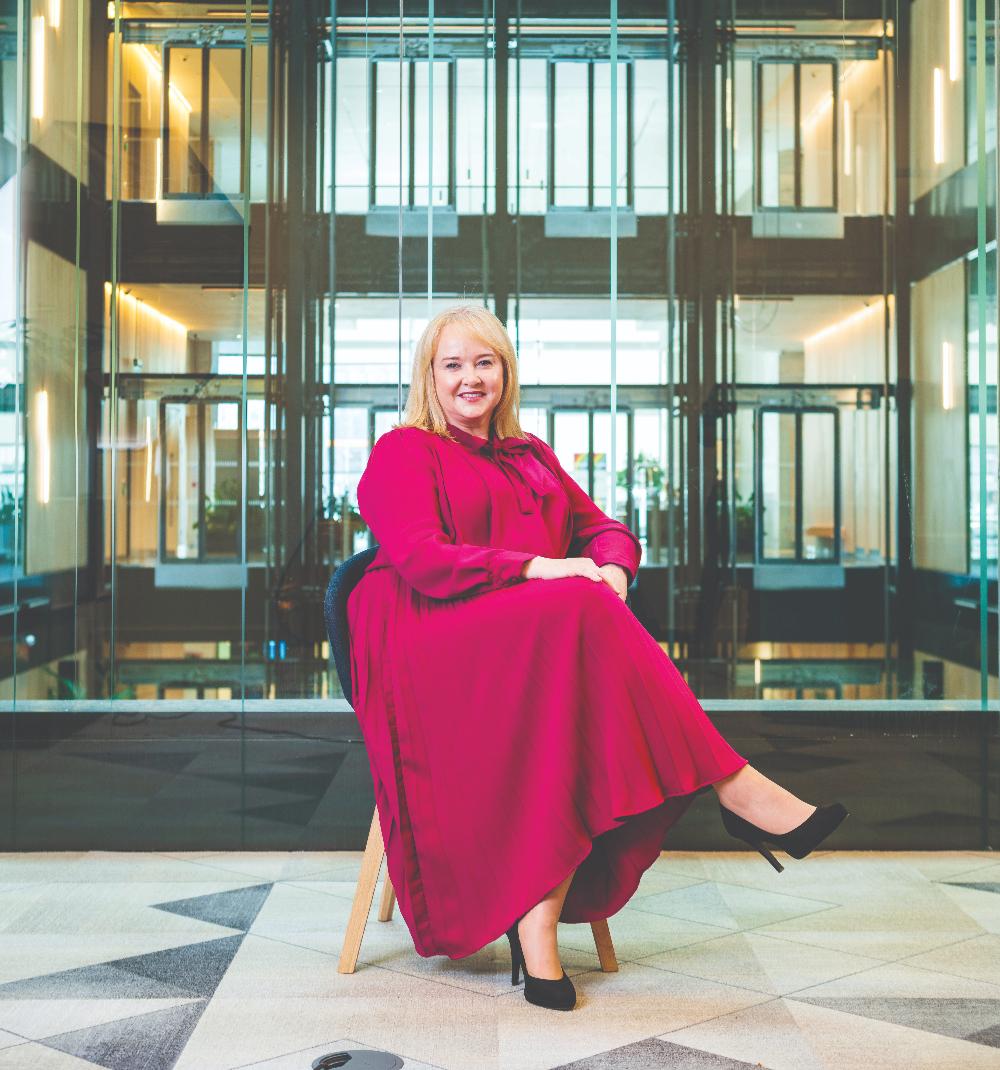
June Butler : Rising to the Challenge
Irish companies founded within the past six years are impressing investors lately with their innovative devices to improve patients’ quality of life and recovery, writes Sorcha Corcoran.
Irish SMEs have proven their resilience over the past few years, but they are still facing multiple
challenges given the current business environment, including the ongoing economic effects of
Brexit, recovering from the Covid-19 pandemic, the availability of skilled staff and access to new
customers and markets.
As June Butler, Chief Executive Officer of the Strategic Banking Corporation of Ireland (SBCI),
points out, the abrupt increase of input costs, in particular energy costs, presents the most
significant challenge to SMEs in Ireland right now. However, relative to their European
counterparts, Irish SMEs have not invested to the same levels in energy-efficiency measures in
recent years.
The European Investment Bank Investment Survey, ‘European Firms and Climate Change
2020/2021’, shows that European SMEs allocate on average 12% of their total investment to
measures to improve their energy efficiency. Comparatively, Irish SMEs devote only 6% of their
investment budget, suggesting there is opportunity for efficiency gains in this area.
“We want to help Irish businesses to address this gap and make it easier for them to enhance
their energy efficiency and improve their sustainability in the long-term. In order to stay
competitive and improve their future growth prospects, Irish SMEs need to consider their green
transition and invest more in areas such as sustainability and digitalisation,” says Butler.
“We know that making a significant investment decision can be difficult when costs are rising,
but we are committed to helping Irish SMEs overcome these challenges by providing them with
accessible and affordable finance. To this end, we have developed and recently launched our
Energy Efficiency Loan Scheme [EELS].”
Specifically tailored
The EELS is a €150m loan guarantee scheme specifically tailored to the needs of SMEs,
farmers and fishers investing in energy efficient equipment and looking to reduce their energy
bills.
The scheme offers low-cost finance ranging from €10,000 to €150,000 at reduced interest rates
and with repayment terms of up to ten years. “This repayment flexibility aims to ensure that the
business’s existing cash flow is not negatively impacted for the investment cost,” notes Butler.
“Credit is available across a range of finance products to ensure the best match for the business
funding requirements. Types of finance include term loans, hire purchase and asset-finance
products.”
At present, EELS is available through AIB, Bank of Ireland and Capitalflow, with additional on-
lenders to follow in the coming weeks. Businesses can apply for the funding through a
straightforward two-step process that starts by completing the eligibility application form
available on the SBCI website (www.sbci.gov.ie). Eligible businesses will receive an eligibility
number (a code) that applicants provide to one of the participating on-lenders as part of their
credit application.
The energy-efficient equipment SMEs can invest in through the scheme ranges from heat
pumps, solar panels, LED lighting, chillers and fluid coolers to commercial water boilers, electric
vehicle charging points and other energy-saving technology.
“For instance, from conversations our team had with farmers who visited our stand at the
National Ploughing Championships in September, there was a lot of interest in EELS funding for
the installation of solar panels on farm buildings. Most farms have abundant roof space suitable
for this,” says Butler.
“Businesses in the hospitality sector may choose to avail of EELS funding for installing solar
panels or switching to LED lighting, but they could also use it for the purchase of energy-efficient
A4-rated kitchen equipment. This could include commercial ovens, fridges and dishwashers, or
even commercial water boilers and commercial laundry washers or dryers – all of which will
reduce their ongoing energy usage.”
Other businesses are considering this scheme to fund the installation of electric vehicle
charging points, so that their customers can charge their electric vehicles while staying at their
hotel or having dinner at their restaurant, she adds.
The Sustainable Energy Authority of Ireland maintains a central listing, the ‘Triple E Register for
Products’, which contains details of all of the energy-saving equipment that is eligible for funding
under EELS. This exhaustive register contains products that all meet a minimum set of energy-
efficiency criteria and typically are of a best-in-class efficiency standard.
Stimulating climate-friendly investment, supporting sustainability and the transition to a net-zero
economy is one of the key priorities of the SBCI’s strategy, according to Butler.
“EELS represents a milestone in our commitment to support the Government’s goal of achieving
a 51% reduction in greenhouse gas emissions by 2030, as indicated in the Climate Action Plan
2021. Businesses in Ireland account for around 13% of the country’s greenhouse gas
emissions, so reducing the energy that a business consumes will contribute to the reduction of
their carbon emissions,” she says.
“Not only does EELS offer businesses opportunities to lower their running costs and increase
profit margins; it also protects them from current and future risks such as energy costs and
carbon tax.
“Making a commitment to save energy and reduce emissions may also help businesses attract
and grow their base of customers in line with increasing consumer interest in climate change
and sustainability.”
Purpose and priorities
Established in 2014, the SBCI’s purpose is to improve the structure of finance markets for Irish
businesses, so that it is easier for these businesses to get the finance they need. This helps
businesses to prosper and builds economic activity in Ireland.
To date, more than 50,000 Irish SMEs from across different economic sectors, from agriculture
to wholesale and retail, have availed of SBCI-funded or guaranteed products. It has provided a
combination of low-cost liquidity and risk-sharing guarantees on loans to Irish SMEs totaling
over €3.2bn.
“We continue to support businesses that are still dealing with the economic impact of the Covid-
19 pandemic and the continued uncertainty surrounding Brexit. Our COVID-19 Loan Scheme
and Brexit Impact Loan Scheme offer low-cost lending of up to €1.5m per applicant over a six-
year period,” says Butler.
“In addition, as we provide an 80% guarantee to the participating on-lenders, collateral
requirements are reduced, with loans up to €500,000 being unsecured. Both of these schemes
will run until the end of December 2022 or until fully subscribed and are available through a
range of finance providers, including credit unions.”
Chief Executive Officer of the SBCI since September 2021, Butler has over 20 years’
experience in the financial services sector. Prior to her appointment, she served as Head of
SME Banking and Sectors in Bank of Ireland where she was responsible for formulating and
driving the strategic direction for the business, including the delivery of the finance and funding
requirements of Irish SMEs. She has also led a team of sector specialists providing strategic
insight into the needs of Irish businesses across a variety of sectors.
“My priorities as CEO of the SBCI over the coming months are threefold. Firstly, I want us to
continue delivering government policy measures by increasing access to finance for Irish SMEs
through large-scale loan guarantee schemes,” she says.
“At the same time, we will endeavour to promote sustainability through the development of
targeted financial solutions such as EELS, which address the challenges posed by climate
change to SMEs and the broader economy.
“Thirdly, I want us to enable SMEs to grow and prosper through the delivery of innovative
supports which we may develop through strategic partnerships for SMEs as they grow their
businesses.”
For more information, visit the website, www.sbci.gov.ie, follow the SBCI on social media
(@SBCIreland) or get in touch via email at info@sbci.gov.ie.


Cathal Fay : Power to the People
Cathal Fay, CEO and Co-founder of PrepayPower
Power to the PeopleSelected as Ireland’s Most Trusted Leader by Great Places to Work this year and an EY Entrepreneur of the Year 2022 finalist, Cathal Fay, CEO and Co-founder of PrepayPower, believes its service will become attractive to a larger cohort of people due to the energy crisis.
Q: Have you always had a business head on your shoulders?
Cathal Fay (CF): I started out my career in the 1990s in Eircom, which was very much a large semi-State company at the time. I learnt lots during my time there. However, I found it a little slow moving and lacking in autonomy for me. When an opportunity came up to leave to start a business in e-books and mobile productivity software I said yes immediately. This was back in 2000 in the days before smartphones and the software that we developed was for pocket computers (Psion Organisers).
We were too early to the market and unfortunately the business was unsuccessful. However, I was bitten by the start-up bug and wanted to continue. I moved into mobile content (ringtones, graphics and games) with Red Circle. I led this business to become the largest provider of ringtones in the UK, growing its revenues from €5m to €25m within three years. The business was sold to Zamano in 2007 in a €24.4m deal. After that exit, I was approached by a former colleague in 2010 to join a start-up in the prepaid electricity space and jumped at the chance. At that point PrepayPower was born. This was the first time in Ireland that customers could choose a prepaid electricity service.
Q: How did you grow and develop the business?
CF: We started off in 2010 above a second-hand bookshop in Blackrock in Dublin. At that time we had no customers and no revenues. With my experience in marketing and operations from Red Circle we used our limited funding which we had raised from friends and family to prove our business model with a trial in Tallaght in 2011. The response rates to our advertising were off the charts. Sales continued to roll in through customer recommendations when we didn’t have enough money to advertise.
The next step was to raise sufficient funding to be able to drive the business to grow to its potential. It took us 11 months to find the right investors for us. Eventually we brought in two tremendous investors in Ulric Kenny, Co-founder of Ion Equity, and serial tech entrepreneur Andrew Collins. They brought not just capital but wonderful experience to the business and have been instrumental in helping me to drive it. With annual turnover of around €200m, PrepayPower now has just over 170,000 electricity customers, together with 60,000 gas customers and – uniquely in Ireland – 15,000 pay-as-you-go broadband customers.
Q: What is the secret to the success of PrepayPower?
CF: We put customers in control by providing them with information on how much electricity they’re using so that they can reduce consumption and save. The average customer reduces their usage by over 8% per annum when they join us. We back this with great customer service. We are the top-ranked supplier in Ireland on TrustPilot based on our customer reviews. Our great team of 350 people work together to drive the success of the business. We use the Great Places to Work model to get the pulse of the organisation and we always rank well, particularly with all team members being clear on their purpose.
We have a variety of different skillsets across a range of areas from sales, customer experience, finance and software development to hedging. Our hedging expertise has helped us to manage the rising electricity and gas wholesale markets more effectively than competitors.
Q: Any other news or future plans you can share?
CF: We are approaching 250,000 customer accounts. This is a combination of 173,000 electricity accounts, 61,000 gas accounts and 16,000 broadband accounts. This will be a great team celebration where we all get together to reflect on our continued growth.
We are about to launch a feature in our app to allow customers to put some money aside in summer months to help deal with the increase in energy costs in winter. In the longer term we plan on continuing to grow our offering by providing more energy services to customers to help them move their demand to times when energy is cheaper and greener.
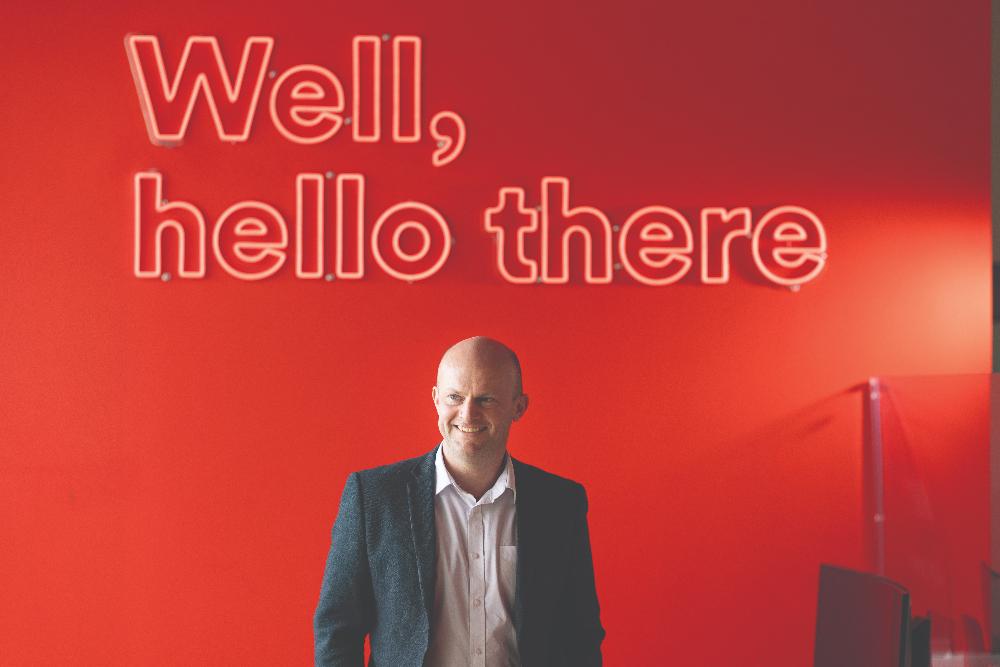
Aidan D’Arcy : Full Speed Ahead
Full Speed Ahead with Virgin Media Business
Already delivering the fastest broadband speeds in Ireland, Virgin Media Business is firmly committed to ensuring that connectivity, security and reliability continues for businesses of all sizes.
Virgin Media Ireland recently appointed Aidan D’Arcy as Vice-President of Wholesale and Business with immediate effect, reporting to CEO Tony Hanway. Having first joined the business as an engineering graduate in 2004, in his new role D’Arcy will be responsible for the strategic growth and development of Virgin Media Business, while also working closely with the Tech Solutions and Consumer functions.
An important area of responsibility for D’Arcy will be to oversee the expansion of Virgin Media’s full-fibre network – the focus of a current €200m investment by the company. The upgrade is expected to take three years to complete and create over 500 jobs, eventually delivering speeds of up to 10Gbps (Gigabits per second) to 1 million premises nationwide.
“Virgin Media’s full-fibre investment is an exciting development for customers across Ireland. It demonstrates our commitment to providing the best-connected entertainment experiences to Irish consumers and provides a step towards a 10G broadband service,” says D’Arcy.
The investment also offers the potential to work with other service providers at a wholesale level, he adds. “Wholesale is an interesting opportunity for Virgin Media and we will continue to monitor any potential place we could take in this area.”
Businesses will see benefits from going full-fibre from the perspective of speed superiority being maintained with flexibility to upgrade to 1G and also to add on tailored business services such as Virgin Media’s Cloud Voice product and Business WiFi.“Additionally, our business TV offering is going from strength to strength with our TV360 platform and some exciting current and new content in the pipeline,” D’Arcy notes.
Partnering with purpose
Virgin Media Business is very mindful of the unprecedented challenges facing businesses at the moment and is helping them as a trustworthy and reliable partner.
“Certainty is a key condition that businesses need and arguably the most illusive one over the past few years. Covid-19 was a difficult period for many businesses to navigate through and now there are fresh challenges emerging from inflation and supply-chain uncertainty – to name just two. On top of this, cyber threats are more prevalent now than ever,” says D’Arcy.
“Robust protections for businesses are important as we see the increasing use of cloud and digital services. Virgin Media’s connectivity portfolio from SD-WAN to Dedicated Internet Access and broadband all have options for cyber-security enablement. If any customer doesn’t have cyber protection – which we would encourage all businesses to have – we have options for them to review this with our expert team.”
The Central Statistics Office’s ‘Survey on E-Commerce and ICT 2021’ revealed that 59% of businesses had purchased cloud computing services, up from 51% in 2020. It also showed that one third of enterprises made use of interconnected devices or systems that can be monitored or controlled remotely via the Internet.
With the more widespread move towards a more digital future, it has become essential for businesses to be equipped with better connectivity and collaboration to fully embrace this transition. The gap in connectivity capabilities between larger enterprises and SMEs became apparent during the pandemic. However, the pandemic also presented an opportunity for smaller businesses to bridge the divide and increase their appetite for digital transformation.
In its white paper, The Road to the Digital Future of SMEs, IDC stated: “From Voice-over Internet Protocol [VoIP] to accessing the cloud, the benefits of flexible working, improving digital marketing and enhancing customer experience mean that reliable, high Internet-connection speed is a necessity for the future.” According to D’Arcy, this is especially true for SMEs taking their first steps towards a future that looks exponentially more digital than ever before and where hybrid working will become the norm.
The third annual National Remote Working Survey, released by NUI Galway in May, revealed that, of those employees who could work remotely, 52% were currently working hybrid, 40% fully remotely and only 8% were fully onsite. Compiled from responses from over 8,400 employees, the research highlighted that 30% of all respondents indicated that they would change job if their future remote working preferences were not facilitated.
“With many workplaces adopting a hybrid model of working, reliable and fast connectivity lies at the heart of this journey for small firms as they endeavour to empower their people to do their job wherever they are, whenever it matters and however works best for everyone,” says D’Arcy.
“Good connectivity is crucial for SMEs in helping people to collaborate better with colleagues and customers remotely. It has the potential to improve productivity for individuals working remotely, in the office or anywhere else – allowing people to do their jobs in a healthy, sustainable way in this new normal.”
Backing Business
Another important way that Virgin Media Business has shown its commitment to SMEs in recent years has been its #BackingBusiness initiative, which involved a €1m support fund being pledged in 2020.
“Our goal is to create opportunities for all businesses to grow through digital technology. With #BackingBusiness, we wanted to support them by sharing their inspiring stories of resilience and promote their businesses across our Virgin Media television channels and our social media platforms,” D’Arcy explains.
“With a reach of around 2.7 million people every week across our channels, we were able to support over 300 businesses through promotions, helping them to get back to business. We took our shows on the road, broadcasting on Ireland AM, Elaine, The Six O’Clock Show and The Tonight Show from Limerick, Cork and Kilkenny, showcasing some wonderful local businesses.”
Virgin Media Business then took the initiative a step further in partnership with Digital Business Ireland (DBI), Permanent TSB, Milk Bottle Labs and Local Enterprise Offices. Five successful applicants benefited from a complete digital transformation to enhance their e-commerce offering and trading platform so they could compete globally.
The digital transformation package, funded by Permanent TSB, included a professionally built e-commerce store on Shopify by Milk Bottle Labs; one year of free fibre business broadband with Virgin Media Business; dedicated training in digital marketing from their Local Enterprise Office; business development support and full membership of DBI’s extensive network; and expert support to boost their digital delivery.
“The idea was to help these small businesses make the most of new online consumer spending patterns with support from industry experts to help raise their e-commerce offering to the next level,” says D’Arcy.
“#BackingBusiness proved so popular and impactful to indigenous Irish SMEs in 2020 and 2021 that we will be continuing the programme in 2022 and beyond. The next phase of the initiative will bring together two of our passions – sustainability and supporting Irish businesses – and the focus will remain on innovative, forward-thinking and ambitious businesses.”
Medtech Momentum
Medtech Momentum
Irish companies founded within the past six years are impressing investors lately with their innovative devices to improve patients’ quality of life and recovery, writes Sorcha Corcoran.
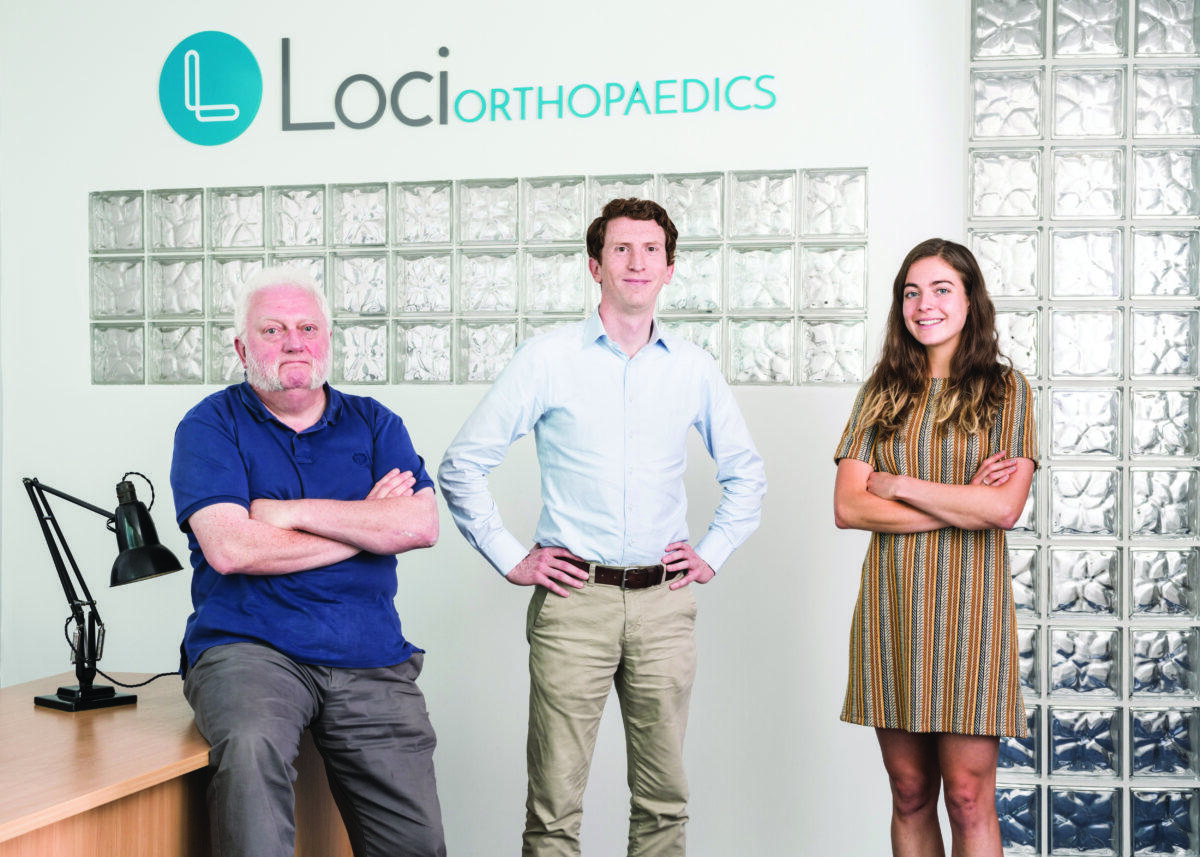
In June, Loci Orthopaedics was awarded over €8m in funding and financial support from the European Commission via the highly competitive European Innovation Council (EIC) Accelerator Programme – a major validation for the new implant it has developed for the treatment of thumb base joint arthritis. The Galway-based company will receive €2.5m in grant funding initially, followed by a €5.5m equity investment, supported by the European Investment Bank.
Over 30 million people in the EU and 20 million people in the US are affected by thumb base joint arthritis, a condition which causes pain and decreased hand function. Driven to improve the lives of sufferers and address the unmet clinical need they identified, Dr Brendan Boland and Gerry Clarke founded Loci Orthopaedics in 2017 as a spin-out from NUI Galway, University College Cork and KU Leuven in Belgium.
“We used the most recent biomechanics research to ensure the implant we designed fully recreates the natural biomechanics of the joint for superior clinical outcomes,” says Clarke.
“To receive this level of funding is a massive endorsement of the need for a better treatment for this crippling condition. It will enable us to complete a clinical trial we started recently and pursue regulatory clearance in the EU and US, prior to full-scale commercialisation and clinical use,” adds Boland.
 Revolutionising bone repair
Also in the field of orthopaedics, Zoan BioMed recently announced a partnership with Swedish 3D bioprinting company Cellink, which it hopes will lead to a future where bone breaks can be repaired by 3D printing bones made from marine coral.
Founded in 2016 by Declan Clarke and Ronnie Robins, Zoan BioMed designs and develops orthopaedic devices from the ethical and sustainable cultivation of marine coral, grown at its state-of-the-art facility on the shores of Lough Inagh in Connemara. Along with leading clinicians around the world, Zoan BioMed recognised the huge potential of marine coral to improve patient outcomes and reduce the costs associated with bone repair.
“Because of its comparative similarities to human bone structure and inherent strength and purity, marine coral is a highly effective bone grafting substitute,” says Stephen Wann, CEO, Zoan BioMed.
The company has developed the world’s first, scalable indoor coral production system with ISO 13485 accreditation. When harvested, refined into granules and implanted by a surgeon into the bone trauma site, the material accelerates healing, safeguards against infection, reduces surgeon operating time and ultimately gets patients back on their feet and enjoying life quicker.
“With Cellink, we have the ideal partner that can build upon the encouraging trial results we have observed with our coral material. It is incredibly exciting to envisage that we can mimic and improve these results with a 3D-printed solution that can offer customised patient devices,” says Wann.
To date, Zoan BioMed has been funded through private investment, along with backing from the European Fund, Enterprise Ireland, Western Development Commission and Údarás Na Gaeltachta. In May it announced its latest fundraising round of up to €5m, to allow it to scale and grow internationally.
Easing discomfort
Meanwhile, three angel syndicates from the Halo Business Angel Network led a recent €1.925m investment in SymPhysis Medical, which is developing a device that eases the discomfort and distress of fluid in the chest for cancer patients undergoing palliative care.

Company founders Dr Michelle Tierney and Tim Jones uncovered the under-met need for effective treatment of fluid in the chest, or malignant ple
ural effusion, as part of the NUI Galway BioInnovate Fellowship programme. The condition is experienced by roughly half of metastatic cancer patients and can cause severe shortness of breath and chest pain. Often patients are fitted with an invasive and uncomfortable pleural catheter.
Using novel technologies, Tierney and Jones are working on a discreet, patient-centric drainage device called ‘Releaze’, which is less invasive to place than leading competitor devices on the market and can be removed after just 30 days.
Crucially, a usability study carried out with the UK’s National Innovation Centre for Ageing has shown that the device can be managed by patients themselves without the assistance of a nurse. “The ability to successfully drain the fluid and to perform this with confidence in an outpatient setting will greatly benefit patients,” said Dr David Breen, a leading interventional pulmonologist in Galway University Hospital, who has been advising the team for the past four years.
SymPhysis Medical has filed two patent applications relating to the novel aspects of the technology used to create the new device. According to the co-founders, the funding will be used to complete product development and target Food and Drug Administration (FDA) clearance. It will also help the company to expand its team from three to seven people by the end of this year.
“Following FDA clearance, we expect test market sales in the US to reach €1.5m in the first year, starting in Q4 2023. We are already working with two of the top five cancer care centres in the US. The team will quickly follow the rollout there by seeking the CE Mark in the EU and, by Q4 2025, we expect turnover to reach €49m,” says Jones.
 Addressing air bubbles
Moving down to Cork, Gasgon Medical recently raised €2.25m as part of a funding round led by DBIC Ventures and including a number of private investors in the US. This comes on top of the company’s success in winning a €3m Fast Track to Innovation grant from the EIC last December and being awarded the top Seedcorn prize of €100,000 in 2021.
Founded by Vincent Forde in 2018, Gasgon Medical has developed a low-cost device called AirVault that attaches directly to intravenous (IV) drips in hospitals to eliminate air bubbles. These can be fatal for patients if they enter the bloodstream and potentially dangerous for nurses, who must break the IV line if air bubbles form, which exposes them to medications that can be harmful over time.
“We are currently carrying out pilot studies of our patent-pending technology in hospitals in Ireland, Europe and the US. They see it as a no-brainer and our aim is for every IV system worldwide to have an AirVault attached as the de-facto solution to eliminating air bubbles,” says Forde.
Currently employing six people, Gasgon Medical plans to hire in Ireland and the US with this new round of funding. The money will also be used for marketing and expanding into new markets, including veterinary and human use.
“The resources required to track and eliminate air from IVs is a constant drain for nurses and health systems. Our priority is in accelerating development work to attain regulatory approval, to be ready to launch products into hospitals, with an initial focus on the US,” says Forde.
A Call to Order with Eithne Dunne

Ireland has no shortage of players in the burgeoning food-tech field, all of whom have literally made it their business to tackle the most pressing problems for their
food services clients, writes EITHNE DUNNE.
Given the colossal challenges the food services sector has had to face over the past two years, it needs all the help it can get. And at least some of that help will come in the form of software that will boost effciency, cut down on unnecessary time and expense, and therefore improve the all-important bottom line.
From the customer’s perspective, the restaurant
and takeaway business is pretty sophisticated from a tech point of view; you can order via an app or online and it’s generally pretty seamless. Not so, however, for those running the business, as Barry McNerney, CEO of Unify Ordering, explains:
“In most restaurants the chefs and managers are still compiling orders using paper and pen and either phoning them in to a supplier’s answering machine or emailing them,” he says.
It’s not hard to figure out that this ‘system’ can lead to all kinds of errors and misunderstandings with food orders. This translates into operational problems for the restaurant, not to mention waste. Unify’s so ware allows restaurant staff to compile orders throughout the day, collaborate on them and then send them through to suppliers – all electronically, leaving far less room for mistakes.

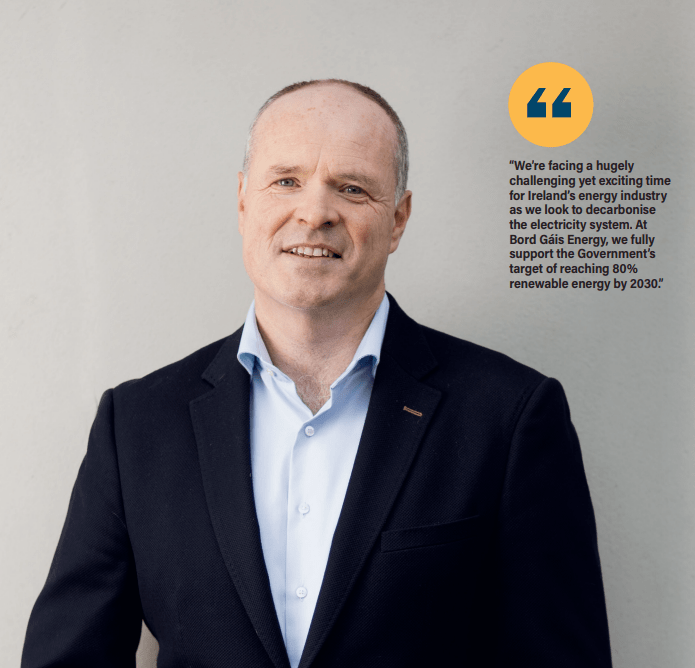
Natural Progression
Bord Gáis Energy is playing a leading role in the transition to net-zero greenhouse emissions by re-imagining the use of energy with the help of innovative NATURAL products and services.
Bord Gáis Energy recently announced a new partnership with French renewable energy producer Neoen on three solar farms that will provide electricity to the national grid in 2022. Under an agreement running until the end of 2037, Bord Gáis Energy will be the sole offtaker of the electricity produced from facilities in Co Meath and Co Wicklow. The three solar farms are already under construction and will have a capacity of 58MWp, the production of which will be enough to power around 12,700 homes a year. This is the latest development in Bord Gáis Energy’s transformation to support the journey to net-zero as outlined in the Government’s Climate Action Plan published in November.
“We’re facing a hugely challenging yet exciting time for Ireland’s energy industry as we look to decarbonise the electricity system. At Bord Gáis Energy, we fully support the Government’s target of reaching 80% renewable energy by 2030,” says Dave Kirwan, Managing Director of Bord Gáis Energy. “Our current renewable supply portfolio is in excess of 220MW, which powers around 73,000 homes. We aim to treble this by 2025.”

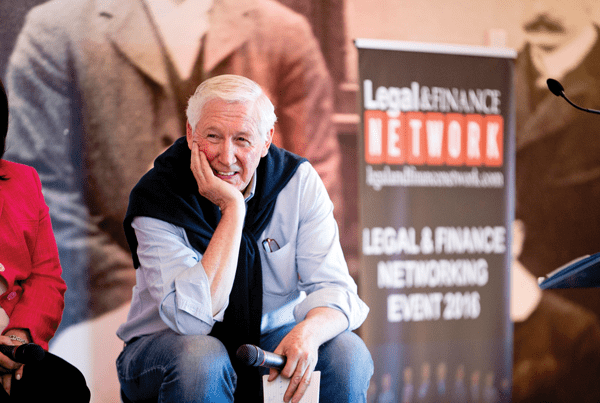
Mentor: Kingsley Aikins
 Kingsley Aikins, CEO, The Networking Institute
Throughout his extensive career, networking has been at the heart of everything CEO of The Networking Institute Kingsley Aikins has done. Since Covid-19, he has discovered a ‘whole new tribe’ in adapting to the virtual world we all now operate in, writes Eithne Dunne.
To say that Kingsley Aikins knows a thing or two about networking would be an almost laughable understatement. The Networking Institute CEO lives and breathes it, and has done for decades. It’s a craft he honed through many years working on trade promotion, philanthropy and diaspora engagement all over the world, perhaps most notably during his 21-year stint as head of The Ireland Funds in the US, during which he raised US$250m for Irish projects. He also spent a decade in Sydney, Australia working for the Irish Trade Board and IDA Ireland, and received a CBE for his work on British-Irish relations. Now back in Dublin for what he calls the ‘third act’ of his career, Aikins is passing on his networking knowhow to both individual and corporate clients through The Networking Institute, which he founded in 2010. Deceptively powerful and oft-underestimated, networking is a skill you sideline at your peril. And it’s not just Aikins who beats this particular drum; various research studies have suggested that it’s networking – and not necessarily knowledge directly related to your job – that turns a mediocre career into a dream-fulfilling one.
As Aikins puts it, it’s the “glue that makes everything happen”. It’s also, he says, an essential key to survive and thrive in challenging times – just like the ones we find ourselves in now. Radical rethink Covid-19 turned The Networking Institute on its head earlier this year; the business went to zero overnight in February, losing all of its workshop and presentation contracts in one fell swoop. Cue a fundamental rethink of how the business operated, and what the CEO calls a ‘low-tech and high-tech’ approach. “We first audited our network, looked at our key connections and started making calls and sending emails to let people know what we were doing. We then embraced LinkedIn as our social media of choice. The reason is that, globally, over 700 million people have made information about their work, education and interests available there,” he says. The high-tech aspect of the company’s approach saw it publishing articles and videos on LinkedIn and making its first foray into what would become its saving grace – webinars. It has now done 80 of these since March, including one with Shannon Chamber.
 Kingsley Aikins, CEO, The Networking Institute
The institute’s experience this year is proof positive that there are alternative ways of doing things, even if they’re not your first choice, and the same can be said for networking successfully in the times we live in. “We just have to network differently, and use all the online opportunities we have,” says Aikins. “That’s why ‘zooming’, which no one had heard of before, is now in the lexicon. There’s turbulence right now but there’s also opportunity.” In a classic example of the power of networking, Aikins was doing a webinar for the Singapore Chamber of Commerce earlier this year, and one of the people on the call was an Irish lawyer working for an international law firm there. Aikins got talking to him, secured an introduction to a contact in the law firm’s London office and, two conversations later, is planning six webinars for that firm.
“If I had contacted this law firm directly, I wouldn’t have got past first base,” he says. “But now we have a substantial amount of work from them.” This speaks to what Aikins has dubbed the “whole new tribe” he has made connections with this year, despite – or perhaps because of – Covid-19. Personal branding Aikins firmly believes that networking is an essential tool for anyone with ambitions for their careers, and notes that many companies are now recognising the importance of hiring well-connected people. “They want to ‘hire and wire’, ie hire people, and wire into their network; they see this as an asset,” he says. So when you go to a job interview, don’t kid yourself that they’re just looking for qualifications, experience and a firm handshake. They also want to know who you know.
“This is the world of the gig economy, and you have to think about your personal brand. You need to become known for something, build a reputation. Your reputation is what someone says about you when you’re not around,” notes Aikins. He says people today may move through 20 different jobs in their careers, many of which won’t be advertised but filled through connections to the right people. “Your network is portable, it does not go out of date and it goes with you throughout your career.” Lessons learned When Aikins first went to Sydney all those years ago, he knew no-one, but was determined to practise what he now preaches by building a strong and diverse network from the ground up. He started with a tenuous connection (his mother’s neighbour’s son, who lived there at the time), asking him for an introduction to the local Irish business network.
 Kingsley Aikins, CEO, The Networking Institute
“He said there was none, so 13 of us got together and started one. We called it the Lansdowne Road Club, because we used to play rugby,” he recalls. The club dropped ‘Road’ from its title somewhere along the way, but it thrived, and last year Aikins flew to Sydney to help mark its 30th anniversary. The Lansdowne Club now has 2,000 members and is the biggest Irish business network in the world. The club’s formation was also the impetus for major opportunities in Aikins’ career. As he says himself, “one conversation can change your life”; in his case, that conversation was with legendary businessman and former head of Independent News & Media Tony O’Reilly. Aikins had written to O’Reilly asking him to head up the Lansdowne Club. “He said yes, asked me was I free for lunch, and I ended up working for him for 21 years on The Ireland Funds.” He learned much about networking from O’Reilly and others, including The Ireland Funds co-founder and former US Ambassador to Ireland, Dan Rooney.
“Hang around a good networker, and guess what you’ll become? A good networker,” notes Aikins. When reflecting on your existing network, Aikins says the question to ask is: does my network reflect the diversity of the society I live in? “For most, the answer is no. We all have a tendency to hang around with people like ourselves, but it’s really important that you bring elements into your life that allow you to meet non-likeminded people.” That shouldn’t be too difficult, even if your network is mainly based in Ireland, particularly the capital. “When I grew up in Dublin, it was male, pale and stale,” says Aikins.
“Now 33% of the working-age population here were not born in Ireland, so it’s an intensely cosmopolitan city.” A networking culture Companies that recognise the power of networking need to embrace it by training their staff in it, and encouraging them to develop an online identity, in Aikins’ view. “They should budget for this, and open up their organisation to lots of different types of people. Before Covid-19, there was a big problem with the attraction and retention of talented staff. Firms have to create an enabling environment which makes it attractive for people to be there. In the old days, companies outlived people, now people outlive companies.”
Businesses that have taken this on board subscribe to the notion of ‘network intelligence’ – in other words, that there are more smart people outside your company than inside, and you can tap into this resource. You don’t have to become a whizz at networking overnight, far from it. Even the smallest moves towards a better network can have an impact far beyond the effort it takes to make them. “Life is a game of inches, and the difference between success and failure can be tiny,” says Aikins. He’s a firm believer in the theory of marginal gains – the idea that small nudges in a certain direction can tip you over into much larger successes. Aikins himself experienced this often when working with IDA Ireland trying to attract foreign direct investment (FDI). “If we got an FDI deal, great, but if we came a very close second, we got nothing. If you improve what you’re doing by 1%, you don’t get 1% more, you get 100% more,” he says.


Industry Feature: From HR to Eternity

The use of software and technology to support human resources management has never been more critical than it was in 2020, writes Derek Nagle.
Covid-19 has presented many challenges to businesses across Ireland since the pandemic reached these shores – not least the one posed by human resources (HR) management as more and more employees are forced to work from home. Some companies have particularly embraced this sea change with new and innovative solutions that benefit both employer and employee.
Anthony Cronin is founder of Waterford-based Flexiwage. He started the company in 2016 after working for some of the world’s leading payroll service providers for many years, including ADP, SafeGuardWorld International and CoreHR.
 Anthony Cronin, Founder, Flexiwage
From a business perspective, the hardship and difficulties that Covid-19 brought with it are not something that Cronin wishes to experience again, but feels that the pandemic also inspired an unprecedented level of smart tech creativity and innovation.
“Employers were proactive in the push to quickly adapt to new and better ways to communicate, connect and engage with teams, to support working from home and to deal with very dynamic changes in wage supplement implementation, staffing levels disruption and business contingency,” he says.
The idea for Flexiwage came from Cronin identifying the difficulties some workers were experiencing in managing their finances across a monthly period, particularly amongst younger workers and those in lower paid jobs. This was adversely affecting their financial wellness as well as having the further negative effect of people seeking short-term costly credit to see them through to pay day.
Smart innovation Noticing how the worldwide introduction of a monthly pay system over 30 years ago contributed to a rise in debt and short-term credit, Cronin was keen to find an innovation that was smart, simple and benefitted both employers and staff.
A financial activity tracker for employees, Flexiwage is a game changer in payroll, he believes: “Allowing employees to determine their own wage frequency while employers can still run a monthly payroll has not just commercial value to the company in how it saves it money but also boosts employee engagement by providing and supporting greater choice, control and financial well-being,” he says. “Flexiwage allows individuals to schedule their income in a pay frequency that suits their needs without impacting a company’s ability to pay monthly.”
Software developed by Flexiwage can be applied to an employer’s payroll system and can reduce their administration costs by up to 75%. Developers believe it has the potential to revolutionise the industry, being the first major innovation in the payroll world in 30 years.
Since 2019 the company has signed up a number of large international clients including Eurofins and Voxpro. It recently secured a 20-year US patent on its self-scheduled salary software. The process took four years overall and represents a major milestone for the company, which plans to open an office in Boston in the US in early 2021. Increasingly relevant When Covid-19 hit, Flexiwage recognised that functionality had become more acutely relevant overnight as individual workers had to navigate the financial challenges impacting their income and household earnings. The company was proud to play its part in supporting clients and their staff members, many of whom were essential workers during the Covid-19 period. The increased pace of implementation schedules, the sense of urgency, the inclusive communications processes and willingness of all stakeholders to adapt to change, new practices and technologies impressed Cronin greatly. Cronin is quite clear on what is driving the latest trend in payroll technology: “The costs associated with running payroll on a weekly basis have become unsustainable for the most part. Businesses that outsource the function currently can pay up to €5 per person and when payroll is run weekly within an SME or large-scale business, the cost is significant. But we are hugely encouraged by the moves towards investing in employee engagement and wellness initiatives, which is where Flexiwage fits in, providing benefits and value-added services that boost employee satisfaction and productivity as a result.”
Data analytics drive Philip Carney, CEO of The HR Company in Sandyford, Dublin notes that a lot of the latest trends in HR and technology are now driven through data analytics. As companies continue to explore their raw data and data needs, solutions will be found through the advent of technology, he says.
 Philip Carney, CEO, The HR Company
“We have seen the phenomenal growth of Zoom and Microsoft Teams as well as online recruitment assessments using tools such as the ‘Predictive Indicator’. We have also seen significant growth in resolving employee disputes online through the Workplace Relations Commission, as well as an increase in performing medical assessments and employment development programmes remotely.”
Carney is quick to recognise the role of technology in solving various challenges from a HR perspective. Ready access to personal data held on work-related systems means some staff members have the option to complete personal work outside normal working hours. He cites signing a Terms and Conditions of Employment through DocuSign or similar platforms as a prime example. Others include staff updating their personal data on their organisation’s cloud-hosted HR database, such as a change of address, reviewing pension entitlements through a pension platform or adding additional children to their medical plans. There is also the option to complete employee online surveys and send questions to ‘Ask your HR Expert’ as they arise. As far as Covid-19 is concerned, apart from the growth of Zoom and Microsoft Teams, Carney expects to see a growth in the area of mental health awareness from the continued drive for home working.
Because the world of work has changed so dramatically in recent months, The HR Company had to respond accordingly. “We are responding to the need for more and more support using online technologies. These tools were always available to us but now they have been accelerated with the day-to-day demand and interaction we have with our clients in the current environment,” says Carney.
“We are developing tools from inception such as our Gender Pay Gap application, a new tool designed to proactively address this issue. In addition, we are continuing to expand our data protection offering to support SMEs in managing both internal HR records as well as the data they share with their various vendors.” A continuing trend Seamus Byrne, Director of Dublin-based Sapient and Vice President, EMEA of SNP Communications feels it is very likely that tools such as Microsoft Teams and Zoom will continue in the post-pandemic world. These tools represent a viable and cost-effective alternative to being in the office, particularly for meetings and training.
 Seamus Byrne, Director, Sapient and Vice President, EMEA of SNP Communications
“SNP Communications has conducted thousands of virtual workshops since March, using Zoom or similar, aimed at equipping employees with the skills and confidence to engage, collaborate and sell in the virtual world,” he notes. “Working from home means ‘water cooler interaction’ has all but disappeared. By getting employees from across the organisation into two-hour workshops, companies can improve cross-functional interaction and collaboration, while also ensuring their employees are more competent and confident when engaging over video.”
Byrne also notes that training sessions are now typically shorter – usually two hours is the maximum – so it may be difficult for full-day and multiple-day training to become the norm again in 2021 and beyond. Physical location is no longer an issue because everyone is in the same place, on the computer screen, normally working from home. But there is another issue: “Time zones are still a challenge, but it’s not uncommon to see people from San Francisco to Singapore, Belgium to Brazil in the same workshop. That would have been highly unusual and prohibitively expensive in 2019, but in an age of social distancing, this new ‘proximity’ can provide many collateral benefits,” notes Byrne.

Entrepreneur: Nicola Mitchell
 Nicola Mitchell, Founder and CEO, Life Scientific with her EY Entrepreneur of the Year Award
The EY Entrepreneur of the Year 2020 is Nicola Mitchell, Founder and CEO of Life Scientific, a progressive company specialising in the development and registration of generic, ‘off-patent’ agrochemicals. Its goal is to give customers better options to meet their crop protection needs.
Q: Would you say you always had a business head on your shoulders?
NM: I left University College Cork with a master’s qualification in Chemistry and a clear ambition to one day build a multinational business based on science. As a graduate, I took up a role with a generic agrochemicals manufacturer and spent 10 years there learning the industry. I could see the regulatory landscape for agrochemicals was changing and how future success could be defined by a deep understanding of chemistry and regulation.
Q: What is the secret to the success and growth of Life Scientific?
NM: Our in-house research and development (R&D) function is our unique selling point and our critical success factor. We have the ability to reverse engineer a product from the original to produce a product accepted as identical by agrochemical regulatory authorities. It’s a bit like unravelling the Coca Cola recipe – taking the final product and breaking it down into its component ingredients so that we can then put it back together. We don’t just reverse engineer the multinationals’ products, but everything they do – their dossiers, strategies, processes and people – to learn how they think. But producing the clone is only half the story. We have to get the product approved and the natural reaction of regulators is to say ‘no’. We have to build a very convincing case to show our product is comparable and ensure the only conclusion they can come to is to say ‘yes’.
Q: What does your approach to R&D allow you to do differently?
NM: Our unique approach to R&D means we can offer agrochemical products to agronomists and growers earlier than any other off-patent company. The only difference between our product and that of the brand leader is cost. Ours costs less. We can break multinational product recipes down into their component parts and reconstitute them in new ways, for example to increase efficacy by 30%. Because multinationals don’t compete on each other’s products, we are the only company selling all of the key building blocks, making it easier for us to introduce novel combinations for growing a clean and healthy crop. We have also developed novel formulations that work at significantly reduced dose rates.
 Nicola Mitchell, Founder and CEO, Life Scientific with her EY Entrepreneur of the Year Award
Q: How have you grown and developed the business?
NM: I started Life Scientific from a room on the University College Dublin (UCD) campus in 1995 and it quickly became the first Good Laboratory Practice facility in Ireland, offering contract product development services to agrochemical and pharmaceutical clients. Over time, we established the product development capability for generics and, by 2011, the company had successfully pivoted from being a service provider to developing and selling our own products. Today, Life Scientific employs over 80 people and has a portfolio of 62 registered products sold in five countries. We have achieved 50% revenue growth to €60m in the last financial year.
Q: How do you see the business evolving from here?
NM: We have always been a global business – purchasing in Asia, manufacturing and selling in the EU and now planning regulatory filings in North and South America. It is very difficult to replicate our core competence of reverse engineering capability coupled with deep regulatory knowledge. That said, we are always looking to push further and stay ahead. We have a number of research projects ongoing, including with UCD. Agrochemicals are our focus today, but our platform is nimble and agile enough for us to be fast followers of innovation in the crop protection industry, whatever direction that takes. Biocontrol is the obvious move – we will be there when the time is right.
Q: What key lessons have you learned as CEO of Life Scientific?
NM: Only the best will do when attracting and retaining the team. It is the team which has brought the company to where it is now, has shaped our path and will define future success. Our company culture is based on shared leadership and matching responsibility with expertise to create a flexible, collaborative environment for a uniquely productive and enjoyable work experience. More than half of the team are scientists, based at our headquarters in Belfield Office Park near the UCD campus. I recruited many of these scientists myself and within an instant got the sense they were winners, able to see through the confusion of our formative years and happy to be thrown in at the deep end. They make all the hardship worthwhile on days when the whole world seems to be conspiring against you. Simply knowing that if your team can’t do it, then nobody can, is what makes you jump out of bed the next day, all fired up and armed with a brand new set of tactics. Q: Where would you like to be with Life Scientific in five years’ time? NM: Earning annual revenues of €250m with a billion dollar valuation and ultimately to emerge as the single biggest disrupter/challenger in our industry.

Real Innovation Culture with Eric Conway, BearingPoint

Instead of bandying it about as a term, BearingPoint has made innovation a core part of its identity by both thoroughly involving its people and developing its own intellectual property and unique methodologies and techniques.
The term ‘innovation’ is becoming more and more common in how companies describe themselves, how they work and what they offer to their customers. For Eric Conway, Partner and outgoing Country Leader for Ireland at BearingPoint, it’s actually becoming an irritant. “People just throw in words such as innovation, change and digital transformation for sport, when they don’t really know what real innovation is, how to promote it, measure it or track the benefits,” he says.
“Often innovation is not the idea, it is the technique to get there. An obvious example is looking at the internal operations and functions of a well-established organisation and asking them to consider how a new, rapidly growing technology firm would and does perform the same tasks. The established firms have much to learn from new companies that were able to design processes with a blank canvas, allowing for new technologies and fewer barriers based on their ‘this is how we do’ attitude.”
Employing over 4,300 people globally, and 300 in Ireland, BearingPoint is an independent management and technology consultancy with European roots and global reach. Its clients include many of the world's leading companies and government organisations.
Led by Conway, the senior management team at BearingPoint in Ireland has made a conscious effort to create a culture and environment that allows for continuous improvement – which is essentially the backbone of its approach to driving innovation.
“Every now and then you will completely innovate and change and improve how an activity, process, technology or product is created or delivered. However, most of the time you’re just trying to figure out how to make significant continuous improvements that justify the ways you’re working and the fact you’re breaking tradition, questioning the norm and not accepting that what you’re improving is already optimised,” Conway explains.
BearingPoint goes about creating the ideal environment and culture to support this in various ways. Teams are given the headspace to think, explore, debate and reflect without predetermined outcomes being forced.
“It is not a case that ‘no idea is a bad idea’, it is more that we allow staff the airtime to express their thoughts, ideas and opinions. We value everyone’s input and encourage participation,” says Conway.
“We don’t just listen to ‘the expert’ or accept ‘if it’s not broken don’t fix it’. We promote diversity and alternative thinking. Quite often, we add people to a project that have less knowledge on a given topic, process or industry to bring a perspective from another angle.”
BearingPoint measures, quantifies and rewards innovation. Its people are encouraged to get involved in communities of interest, innovation workshops and idea generation sessions. For example, it runs monthly ‘shark tank’ innovation forums where teams work together to come up with an improvement that can be used internally or for clients, or to suggest a new product or service.
“We select and reward the winners, bring the new ideas to market and seek feedback from staff on a very regular basis,” says Conway. “It’s one thing to talk about innovation, but it works a lot better if your staff are familiar with the use of modern techniques to facilitate it. Most of our staff are more than comfortable with techniques such as design sprint, design thinking and Lightning Decision Jam.”
Intellectual Property Push
Around ten years ago, BearingPoint got serious about intellectual property (IP) and progressing its innovations into software products. It has a dedicated business unit called BearingPoint Business Services (BBS), which is focused on the creation of new IP, software products, solutions and technology accelerators. Ireland has recently been added as the firm’s fourth centre of excellence for technology IP development.
Having its own IP and a catalogue of technology enablers has changed the game for the firm, according to Conway. “Not only has this made us more creative and ambitious in nature and mindset, it has also allowed us to differentiate from our competitors,” he explains. “Across the firm we have seen double-digit growth in all of our metrics in the past five years. The Dublin practice is no exception where we have over ten customers in Ireland using our international RegTech software, for example.”
In the BBS unit, BearingPoint has around 25 software solutions with typically 10 to 200 customers each. First created over ten years ago, the Emission Calculator solution is part of this suite of products. It allows an organisation to calculate, report and model all of its carbon footprint in the full life cycle of a product or all carbon emissions related to business activities such as travel or supply chain. The tracking can be done right down to every minor component of a product where the customer can model changes and adjustments in real time on an advanced analytic user interface.
Implemented by some of the best-known global brands that are leading the charge in sustainability innovation, such as Ikea and Nike, the Emission Calculator has really taken off across Europe. BearingPoint is now starting to position it in Ireland with a local team recently trained up and educating the target market here.
“The product meets the new EU regulations for carbon calculations. Therefore, in Ireland we are working to make the solution a utility where multiple companies can use it to centrally report and present summary reports to regulatory authorities,” says Conway.
“The Emission Calculator is a unique offering in the market. There is no other solution that provides the same range of functionality. Other well-known software firms are now starting to develop pilot solutions for sustainability and carbon emissions management but have some way to go.”
Embracing the Future
Looking ahead, BearingPoint plans to continue to grow its presence in each of the 23 countries it operates in, in particular China and the US, and to expand into a select number of new countries. On 1 January, Conway took on the role of Regional Leader at BearingPoint, with responsibility for seven of the firm’s well-established European countries: Ireland, Finland, Italy, the Netherlands, Norway, Sweden and the UK.
“While BearingPoint is quite progressive in terms of knowledge and people sharing from one country to the next, my ambition is to further align the seven countries and continue to improve collaboration. Since Covid-19, our customers are starting to place less of an emphasis on having our consultants onsite and in the room. This means it is far more acceptable and welcome to engage people from other BearingPoint countries,” he says.
When Conway took over the management of the Irish practice over three years ago, he had a genuine ambition to make it the best possible place to work for the staff. An example of this in action was during the Covid-19 lockdown, when the firm really turned up its focus on staff wellbeing. In addition to sending all employees items such as new desks, chairs, monitors and hampers, it started activities including online cooking classes, Zumba classes and boxercise fitness sessions.
“The boxercise was a bit special as we made it available to staff in all 23 countries and engaged professional boxing and health and wellbeing coach Eric Donovan to take the classes. It was pretty cool and motivating to complete three months of lunchtime fitness classes with Eric and then watch him fight live on Sky Sports Box Office with BearingPoint’s brand on his gear,” says Conway.
Donovan has since become BearingPoint’s official ‘Health and Wellbeing Brand Ambassador’. Conway notes: “Eric’s focus on continuous improvement, ambition, innovation, hard work and honesty match very well with our values, ways of working and inclusive mindset.”